Top Signs You Need Garage Door Service – Don’t Ignore These
A garage door gives you warnings before it fails. A door that runs a little slower than it used to, makes a new noise, or stops sealing at the bottom is telling you a specific component is wearing out. Cosmetic wear (fading paint, surface scuffs, light rust) is harmless. Mechanical warnings are not. If your door has changed how it moves or sounds, call (833) 968-4997 for a free estimate rather than waiting for a breakdown.
Slow or Uneven Opening: The Warning Most Lakewood Homeowners Miss
A door that takes three seconds longer to open than it did six months ago isn’t “getting old.” It’s usually a torsion spring that’s lost tension and is now overloading the opener motor on every single cycle. That extra strain eventually takes out the opener on top of the spring, which turns a small repair into a bigger one.
Uneven movement matters just as much. Watch how your door comes up. If one side lags, if the top panel pulls forward before the rest follows, or if you can see daylight change along a gap that used to be even, a spring or cable is out of balance. In Lakewood’s dry air, metal parts cycle through wide temperature swings between seasons, and springs that seemed fine in milder months can lose tension faster than homeowners expect. Cold snaps don’t break springs on their own, but they expose springs that were already weak.
Here’s what a slow or uneven door usually points to:
- One spring with less tension than the other in a two-spring setup, which forces the opener to do work the springs should be doing
- A cable that has jumped a drum or started to fray, changing how the door lifts on one side
- Worn rollers or a bent track dragging on one side of the door
Springs and cables are under serious tension. This is a job for a trained technician, not a weekend project, and we say that as people who work on garage doors all day. Adjusted spring tension is a fifteen-minute fix. A snapped spring that takes a cable with it is a much longer job with double the parts cost.
The Balance Test Every Lakewood Homeowner Should Run Twice a Year
You can catch most spring problems before they snap with a two-minute test. It’s the single most useful thing you can do for your garage door, and it doesn’t require tools.
- Close the door and disconnect the opener using the release cord.
- Lift the door by hand to about waist height.
- Let go.
A balanced door stays where you put it. An imbalanced door drops on its own, slides back down quickly, or feels unusually heavy to lift. Either result points to a spring that’s lost tension or a spring that’s about to fail. The test also tells you something about your opener: if the door is hard for you to lift, it’s harder for the motor, and the motor is the next thing to go.
Run this test in spring and again in fall. Lakewood’s seasons swing hard, and a door that balanced fine in June can feel noticeably heavier by January. If your door fails the test, stop using the opener and get it looked at. You’ll find the same guidance whether your door is a Clopay, an Amarr, or anything else – balance is balance on every brand. When the test fails, the safest next step is a technician’s inspection, and that’s what our garage door repair visits start with.
What the Noises Are Telling You
Your door is a mechanical system, and every new sound maps to a specific part. Here’s the cheat sheet we wish every homeowner had:
- Grinding usually means worn rollers or a dry, dragging track. Left alone, grinding rollers flat-spot and start damaging the track itself.
- Popping points to a cable tension issue, often a cable that’s jumped its drum. If you hear a loud pop and the door stops moving evenly, stop using the door.
- Squealing is metal-on-metal from lack of lubrication at the hinges, rollers, and springs. It’s the cheapest problem to fix and the easiest to ignore until it isn’t cheap anymore.
- Rattling is loose hardware: hinge bolts, bracket fasteners, track mounts. Loose hardware vibrates more with every cycle and loosens further.
One sound deserves special mention. A single loud bang from above the door, followed by the door refusing to lift, is the classic signature of a snapped torsion spring. That’s not a “schedule it next week” situation. Stop using the opener and call a technician, because an opener pulling against a dead spring will burn itself out or yank the door off balance.
Sounds you can name are sounds a technician can diagnose fast. Brand knowledge helps here too: whether your opener is an aging Genie or a newer LiftMaster, different motors have different tolerances for a struggling door, and a technician who works on both knows which one will fail first. That’s the kind of diagnosis that belongs with garage door opener repair when the noise turns out to be coming from the motor rather than the door.
A Door That Closes But Doesn’t Seal Flat
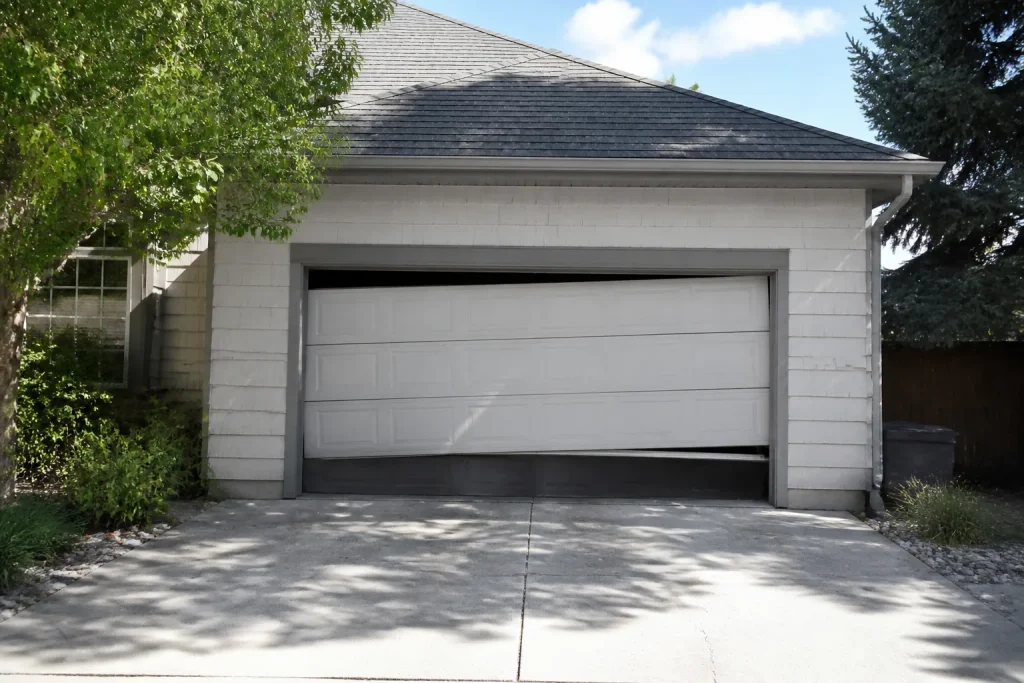
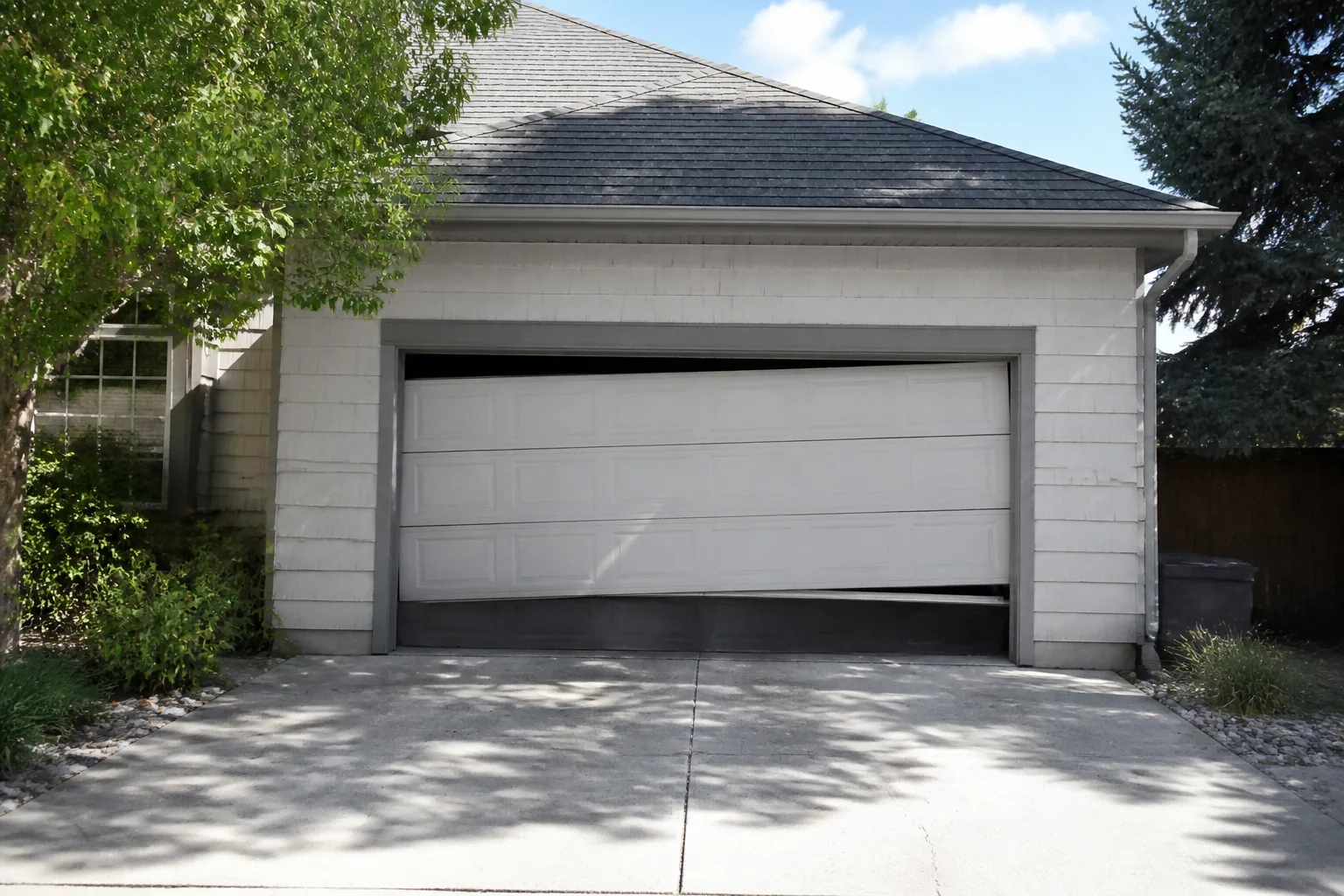
This one gets filed under “cosmetic” and it shouldn’t be. If your door looks fine from the street but you can see a gap along the bottom when it’s closed, or the bottom panel won’t sit flush with the floor, something is bent, broken, or no longer aligned. It could be a bent bottom section, a failing bottom bracket, or a door that’s simply come out of square.
It looks like a weather-seal problem. It isn’t. A door that doesn’t seal flat lets Lakewood’s cold air into the garage all winter, along with dust, insects, and the occasional small visitor you’d rather not host. Your garage shares a wall with your house, so that gap affects the whole home’s comfort, not just the garage. A bent bottom panel also changes how the door seats on every close, which wears the opener and the hinges faster.
Check it once a month: close the door, look along the bottom line from outside, and run a hand along the inside edge for daylight or a draft. A flat, even seal means your door is seating correctly. A gap that changes with the weather or gets wider over time means a technician should look at the bottom section and brackets before the panel gets worse.
When to Call a Pro, and How to Tell It’s Time
Some things are worth watching. Some are worth calling about today. Here’s where we draw the line, and it’s the same line we’d draw for our own doors.
Watch and schedule: a new squeak, light rust on the tracks, a door that closes slightly harder than it used to, a remote that’s become fussy.
Call today: any new grinding, popping, or banging sound; a door that won’t stay up on the balance test; a visible gap at the bottom that’s new; a door that reverses for no reason; or anything involving springs, cables, and the parts under tension.
Strip out the parts that shouldn’t be DIY and you’re left with one honest rule: anything that holds the door up is technician work. Garage doors weigh well over a hundred pounds, springs are wound to carry that load, and a misstep with a cable or a spring is a genuine injury risk. We tell homeowners this on every Garage Door Repair Lakewood Pros call, and it’s true whether the door is a Wayne Dalton or anything else. Our technicians have up to 14 years of experience and are certified to service eight leading brands, so most jobs get diagnosed and finished the same day.
Timing matters for cost, too. A spring replaced before it snaps is a quick job with one part on the invoice. A spring that snaps and drags a cable down with it is a longer repair with double the parts cost, plus a likely opener service on top. Responding to the warning is almost always the less expensive path.
Related services in Lakewood: if the warning turns out to be a worn door rather than a worn part, our team handles garage door installation as well, from measuring the opening to a properly balanced finish.
Every price we quote is agreed in writing before any work starts. No surprises on the invoice.
The Bottom Line
Your garage door warns you before it fails. Slow, uneven movement points to spring tension. Grinding, popping, squealing, and rattling each map to a specific part. A bottom that won’t seal flat is a mechanical problem, not a cosmetic one. And the two-minute balance test twice a year catches more failing springs than anything else you can do.
If you’re in Lakewood and need help, Garage Door Repair Lakewood Pros offers free estimates. Whether your opener is a classic Craftsman or a wi-fi-enabled model, we’ll diagnose the warning and fix the cause. Call (833) 968-4997 and we’ll get your door back in working order.
Frequently Asked Questions
The first signs are usually a door that moves slower or more unevenly than it used to, a new noise (grinding, popping, squealing, or rattling), and a door that fails the balance test or won’t seal flat at the bottom. Cosmetic wear like faded paint or light surface rust isn’t an urgent sign; changes in how the door moves and sounds are. Call (833) 968-4997 for a free estimate.
A spring that’s losing tension shows up as a heavier or slower door, uneven movement, and a failed balance test. A single loud bang followed by the door refusing to lift usually means it’s already snapped. Stop using the opener if you notice any of these, and have a technician look at it before it becomes a cable repair too. Call (833) 968-4997 and we’ll take a look.
Yes, light lubrication of hinges, rollers, and tracks is safe homeowner maintenance and quiets squealing. What you should never adjust yourself is spring tension or cables, because both hold the door’s full weight and can injure you badly if released. Lubrication is a homeowner job; spring tension is a technician job. When in doubt, call (833) 968-4997.
No. We inspect the door, diagnose the part, and quote the repair in writing before any work starts. The written estimate is the price you pay. If the inspection turns up something additional, we tell you before doing it, so nothing gets added to the invoice without your agreement. Call (833) 968-4997 to schedule a free estimate.
Written by the team at Garage Door Repair Lakewood Pros.
Need Garage Door Help?
Call Garage Door Repair Lakewood Pros - the local pro we connect you with is licensed and insured, here with fast after-hours help in Lakewood.
(833) 968-4997