Last updated November 21, 2026
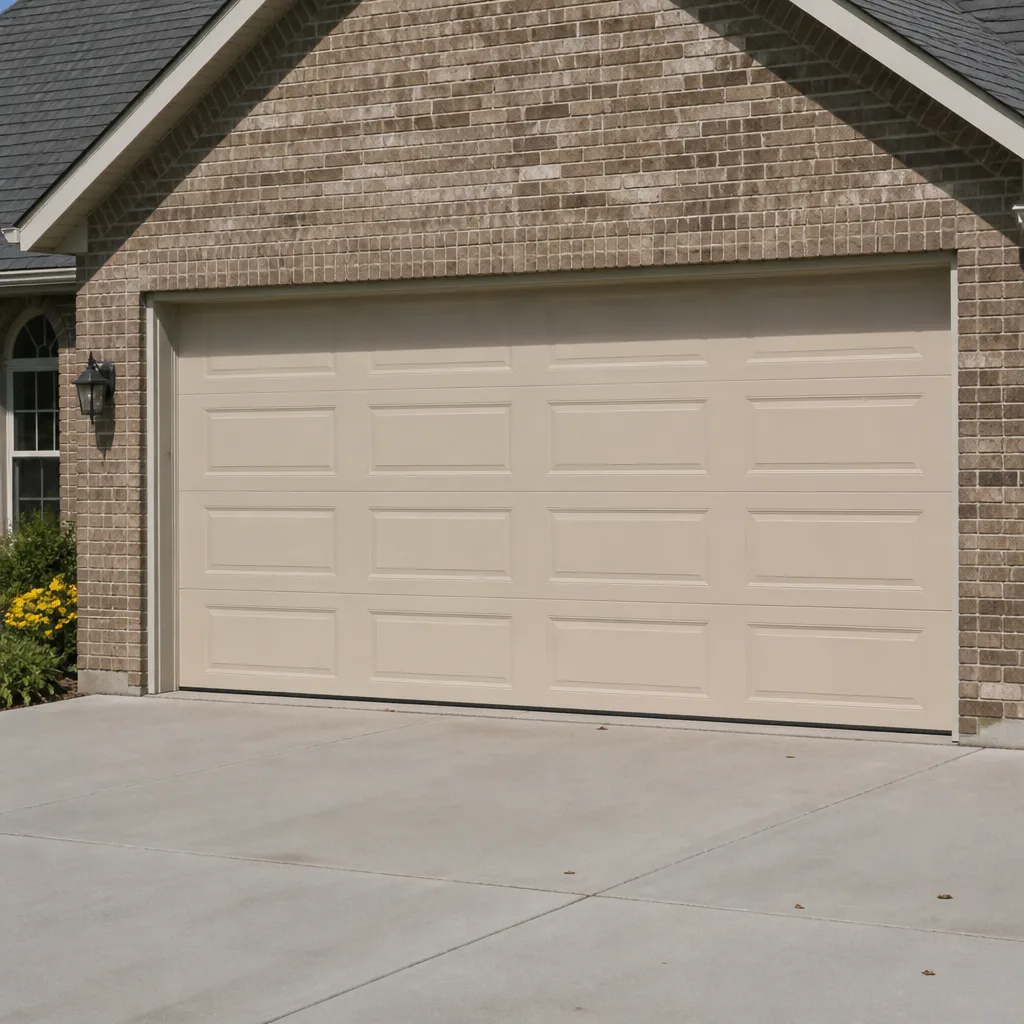 Raised-panel steel
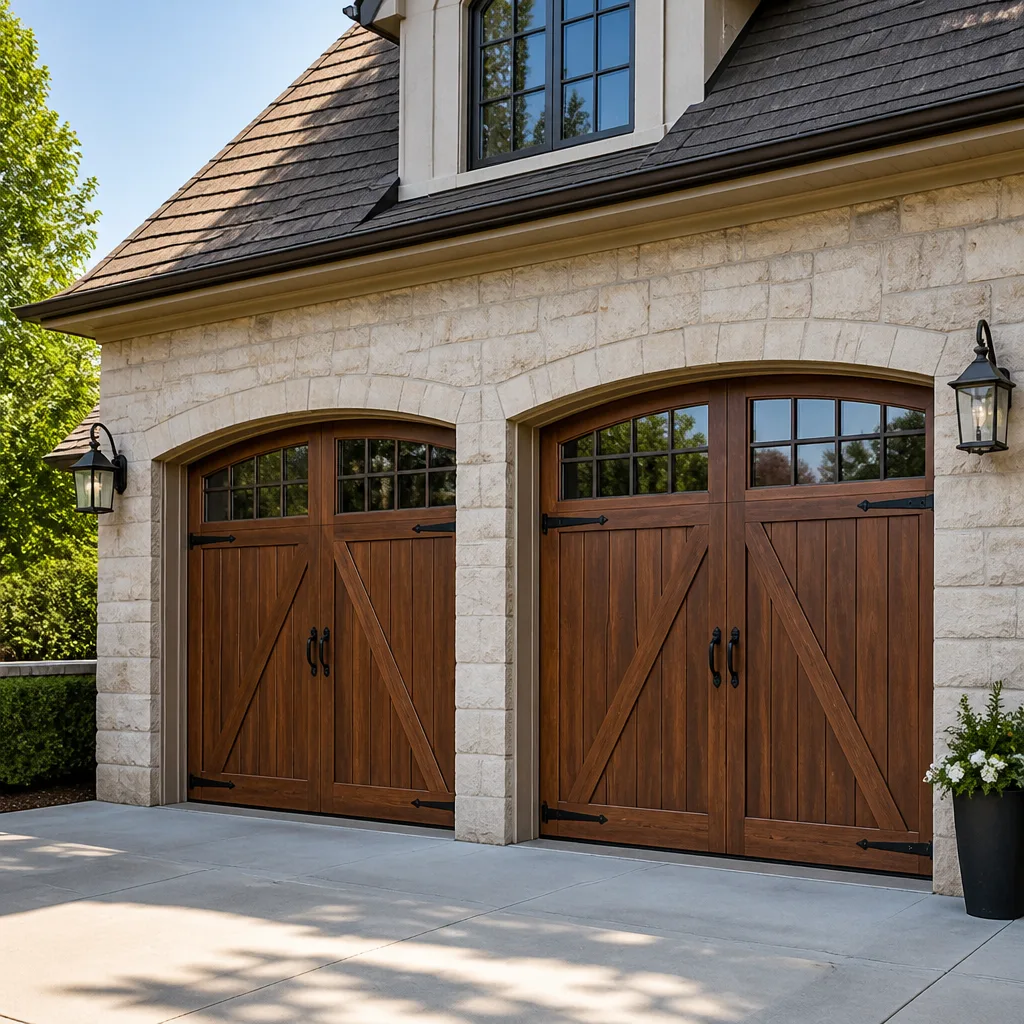 Carriage house
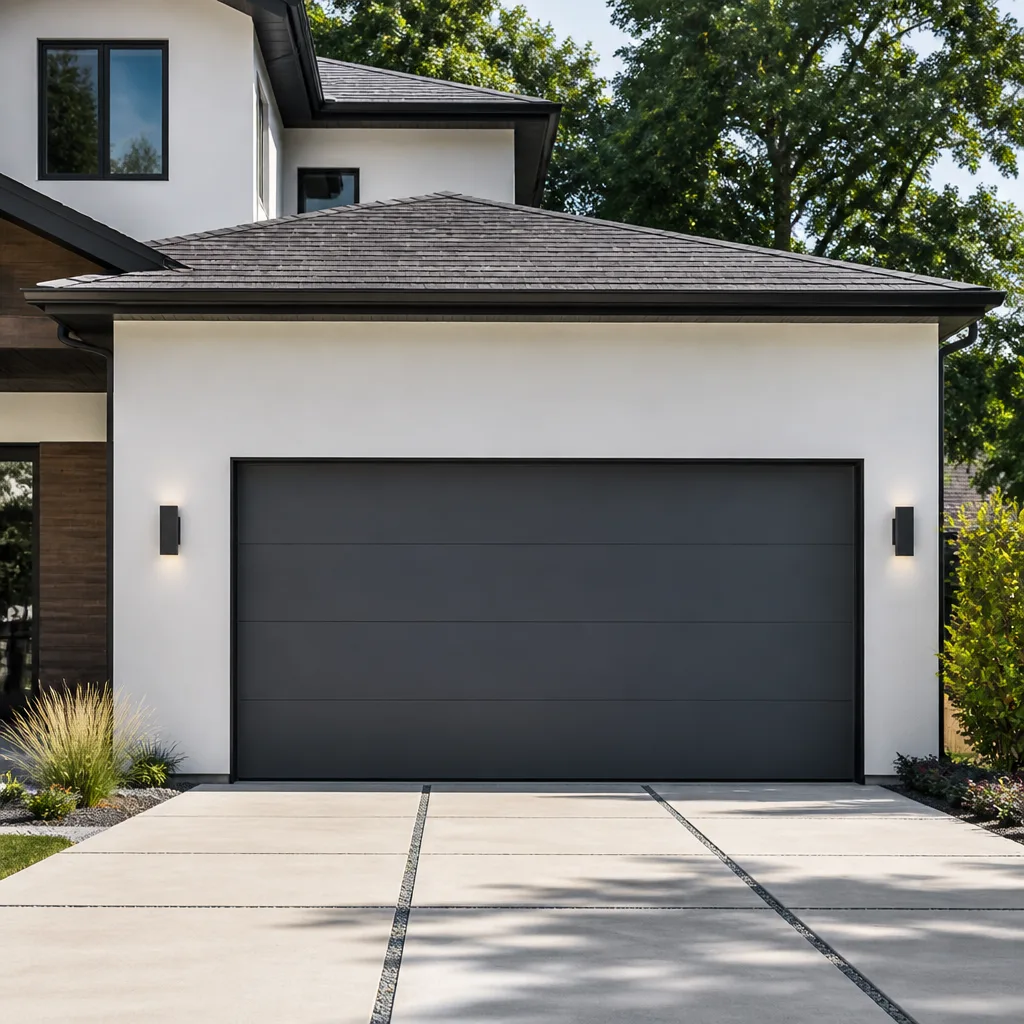 Modern flush
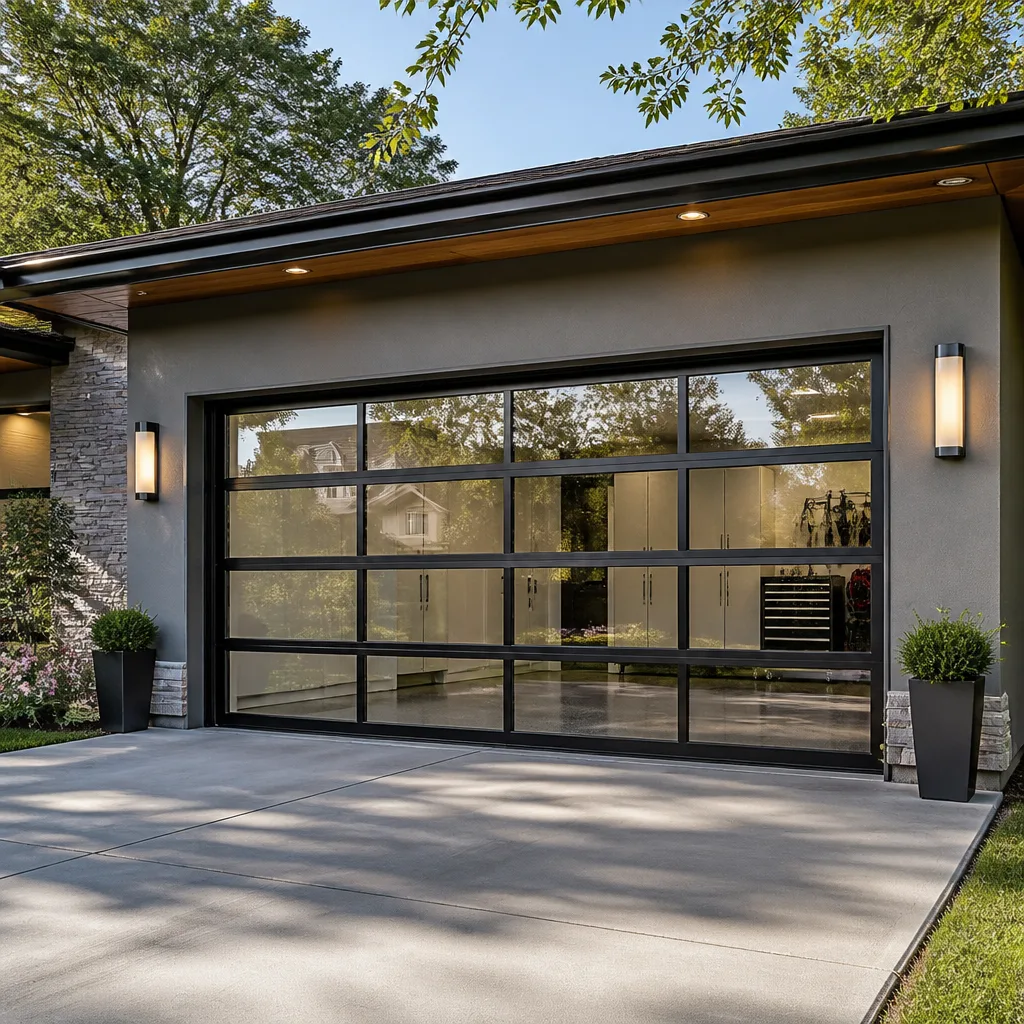 Full-view glass
 LiftMaster openers
 Chamberlain openers
Full 25-point door and opener safety check with every visit - springs, cables, rollers, tracks, and your LiftMaster or Chamberlain opener included
You get a price before we start. It does not change when the pro arrives.
Get your free estimateGarage Door Warning Signs: A Lakewood Homeowner’s Reference Guide
A garage door that takes two seconds longer to open than it did six months ago isn’t aging gracefully. It’s telling you that a torsion spring is losing tension and is likely within weeks of snapping, usually at the worst possible moment – a school morning, a workday, or the night before a trip. Most Lakewood homeowners have been conditioned to hear grinding, popping, and slow travel as “normal wear,” so they wait until the door quits entirely. That’s the moment a small repair turns into an emergency. This guide teaches you to read the specific sounds, movements, and visual clues your door gives off, so you catch the problem while it’s still cheap to fix. You’ll also learn why warning signs speed up in a Lakewood winter.
Quick Answer
Garage door warning signs in Lakewood usually appear as slow, jerky, or noisy travel, a door that reverses unexpectedly, visible cable fraying, and a spring that no longer balances the door. These signals generally mean a worn spring, failing cable, or loose hardware, and they get worse faster during cold snaps. Catching them early keeps a repair small instead of an emergency.
Styles & brands we work with
- Raised-panel steel
- Carriage house
- Modern flush
- Full-view glass
- LiftMaster openers
- Chamberlain openers
Table of Contents
- What Your Door’s Sounds Are Telling You
- The Balance Test: How to Check for Spring Wear
- Visual Clues on Cables, Drums, and Brackets
- Why a Door That Reverses Is a Safety Hazard
- Why Warning Signs Accelerate in a Lakewood Winter
- Opener and Remote Warning Signs
- How a Small Repair Turns Into an Emergency
- A Monthly Walk-Around Checklist
What Your Door’s Sounds Are Telling You
Every garage door makes noise. The question is whether the noise is a lubrication complaint or a structural warning. Homeowners lump them all together as “the door being noisy,” but they point to very different problems, and one of those problems is expensive to ignore.
Grinding usually means metal is contacting metal where it shouldn’t – typically dry rollers, a dry hinge, or a torsion tube that’s lost its lubrication. It’s often the mildest signal and the cheapest to address, but grind that gets louder near the top of travel can point to a worn bearing plate.
Squealing is high-pitched and rhythmic, and it tends to track the rollers as they turn. A squeal usually means friction at the roller stems or the hinges. Some simple lubrication at the moving joints often quiets it. If a single squeal appears in the same spot every cycle, a dry hinge pin is the likely cause.
Popping or snapping is the sound that should get your attention. A sharp pop somewhere in the middle of the door’s travel often means a torsion spring is starting to break, or a cable has slipped off a drum. Don’t wait on this one. A popping spring can snap the rest of the way at any moment, and once a spring lets go, the door has no safe way to move until it’s repaired.
- Grinding: lubrication, worn rollers, or bearing plates – usually a low-grade warning.
- Squealing: friction at hinges and roller stems – often fixable with lubrication.
- Popping or snapping: spring or cable trouble – stop using the door and get it looked at.
- Rattling or banging: loose hardware, worn bushings, or a door that’s gone out of balance.
One more: a door that bangs at the very bottom and top of travel is telling you the limit settings on the opener have drifted, or the door is hitting against the stops. That’s a small adjustment before it turns into damaged panels. In our experience across Lakewood homes, popping on a torsion door is the sound most often dismissed until the door is stuck.
The Balance Test: How to Check for Spring Wear
The balance test tells you whether your springs are still doing their job, and it takes about a minute. Springs carry most of the door’s weight. When they lose tension, the opener has to pick up the slack, which is why a tired spring shows up as a slow or struggling door.
Here’s how to run the balance test:
- Disconnect the opener. On most openers, pull the release cord or handle, which usually sits near the door’s rail.
- Lift the door by the handle to about halfway open, and stop. Let go gently, keeping your hands away from the hinge line and the springs.
- Watch what happens. A door in balance holds roughly where you left it, or drifts slowly.
- If the door slams down, the springs have lost most of their lift and are close to failure.
- If the door shoots upward on its own, the springs are over-tensioned or the door is counterbalanced wrong.
- Reconnect the opener by pulling the release handle back into the carriage and cycling the door once.
A door that used to hold halfway and now drops is a door whose spring is wearing. That’s the early warning most homeowners never check. When a door drops hard on the balance test, the spring is generally weeks or less from breaking, and the smart move is to get it replaced before it does.
One safety note: the balance test is lifting and watching, not adjusting. Torsion springs store an enormous amount of energy, and the winding bars used to tune them belong in trained hands. If the door fails the balance test, don’t try to tighten anything yourself. Call a specialist. Our garage door spring repair service exists because springs are one of the highest-risk components on the whole door. For a broader view of what a failing door needs, see our guide to garage door repair.
Visual Clues on Cables, Drums, and Brackets
You walk past the most telling parts of your door every single day, and most of the warning signs are visual. Spend a minute looking at the area above the door and at the bottom corners. The parts below carry serious tension, so just look – don’t touch.
Cables and cable drums
Cables run from the bottom corners of the door up to drums at the top. A healthy cable is smooth and tight. These are the visual signals to note:
- Frayed or bird-caged cable. If the strands separate or twist into a fuzzy, spiraled mass, the cable is failing. This is a stop-using situation.
- Cable off the drum. If a cable has jumped its groove, the door will pull unevenly and can bind.
- Slack on one side. One cable visibly looser than the other means the door is out of balance or a drum has slipped.
- Rust or kinks at the cable ends, which is a weak point where the cable can snap.
Bottom brackets
The bottom brackets anchor the cables at the corners of the door. Look for a cracked or twisted bracket, a bolt backing out, or a cable that’s pulled out of its slot. A bottom bracket under load can let go suddenly, and it’s one of the most dangerous parts on a garage door if it does. If anything looks bent or cracked at the corners, stop using the door. Most cities require a permit for major door work, so ask Lakewood’s building department about anything structural before you have it changed.
Rollers, hinges, and the track
Worn rollers show up as flat spots or a wobble as the door moves. Hinges that have pulled loose, or a track that’s bent slightly out of line, will make the door drag on one side. A visible gap between the door and the frame, wider at one end than the other, tells you the door is leaning or the track has shifted. For opener-specific trouble, our garage door opener repair page covers the electrical side in detail.
Why a Door That Reverses Is a Safety Hazard
A garage door that goes down and then reverses back up on its own isn’t being quirky. It’s telling you the safety system thinks something is in the way, and it will not close because something in the path is being detected – either real or false. Under federal rules, garage door openers sold in the U.S. are required to have an entrapment protection system that reverses the door when it meets resistance, plus a photoelectric eye at the floor. That system exists to protect people, usually children and pets.
So a door that reverses unexpectedly is either:
- Seeing a false obstruction. A dirty, misaligned, or sun-blocked photo-eye at the bottom of the door. The eyes need to see each other across the opening; dust, cobwebs, or a knocked-out mount will trigger a reversal.
- Sensing real resistance. The opener’s force limit may be set too low, a roller may be binding, or the door may have gone out of balance so it needs more force than it can generate.
- Hitting the safety limit. The door binds on a track that’s out of line, and the opener reads that binding as an obstruction.
Here’s the part people get wrong: removing the safety system to “fix” a reversing door is the opposite of a repair. If your door won’t close, the answer is to find out why the safety system is triggering, not to defeat it. In our experience, a quick check of the photo-eyes catches the majority of these. A misaligned eye is a simple fix; the door then closes normally. If the door still reverses after the eyes are clear and aligned, the cause is mechanical and needs a professional look.
Every technician on our team knows these systems across the brands we service – Genie, Clopay, and Amarr among them – because opener safety settings and door balance work together. Our technicians have up to 14 years of experience, and we’ve seen what happens when a door’s safety reversal is ignored. It’s a repair, not a reconfiguration.
Why Warning Signs Accelerate in a Lakewood Winter
Cold weather makes every garage door problem worse, and Lakewood gets cold enough that the warning signs tend to show up sharpest on the first hard freeze or the first deep stretch of January. The reasons are simple physics.
Metal contracts. Cables, tracks, and the torsion tube all shrink slightly as temperatures drop. A cable that was tight and happy at 70 degrees can develop slack in the cold. A track that was straight enough can bow, and the door starts to bind on one side.
Lubrication stiffens. Garage door lubricants get thicker in the cold. Rollers and hinges that moved freely in summer drag in winter, and the increased friction loads the springs and the opener further. That’s why a door that felt fine in October feels heavy and slow in Lakewood in December.
Springs get brittle. A torsion spring that’s been losing tension quietly all summer is under more tension-per-coil in the cold, and it’s more likely to snap when it’s cold. That’s why so many spring failures happen in winter – the door is at its maximum load when the spring is at its weakest.
Weatherstripping stiffens too. The rubber seal at the bottom of the door gets hard in the cold, so a door that relies on its seal to close can bounce open on a hard seal. That’s not a door problem, but it triggers the same reversal behavior.
The practical takeaway: if your door starts to feel slow or heavy in November, treat it now rather than waiting for the coldest weeks. A cold-weather symptom that appears once and goes away is a truck with a loose exhaust; a cold-weather symptom that stays is a warning about your springs. If you’re planning a replacement anyway, our garage door installation service covers what a new door can do in this climate.
Opener and Remote Warning Signs
The opener is the other half of the system, and its warning signs show up in how the door moves and responds, not just in noise. An opener that seems fine but is struggling is a door that’s about to be a problem.
Slow or jerky travel usually points to the door needing more force than the opener can supply. That can be an underperforming spring, a binding roller, or an opener with a worn drive. Check the door balance first; if the door balances, the opener is the suspect.
A door that opens partway and stops may be hitting a limit setting, or the opener’s force limit has backed off enough to trip on a binding door. Either way, don’t repeatedly force it open.
Remote or keypad trouble that only happens from far away is usually a battery or range issue. If the door will only respond from right up close, the opener’s radio logic board or the remote battery is the likely cause. Swap the battery first – it’s the most common culprit.
Flickering or fading lights on the opener usually mean the bulb is failing or the logic board is showing its age. Old Craftsman openers and modern wi-fi LiftMaster or Chamberlain myQ models use different boards, which is why we make it a point to know both. Whether your opener is a classic Craftsman or a wi-fi-enabled LiftMaster, the diagnostic process is the same. And if you’re replacing a remote or a wall console, we can often get you the part without the “we have to order that” wait.
See the difference
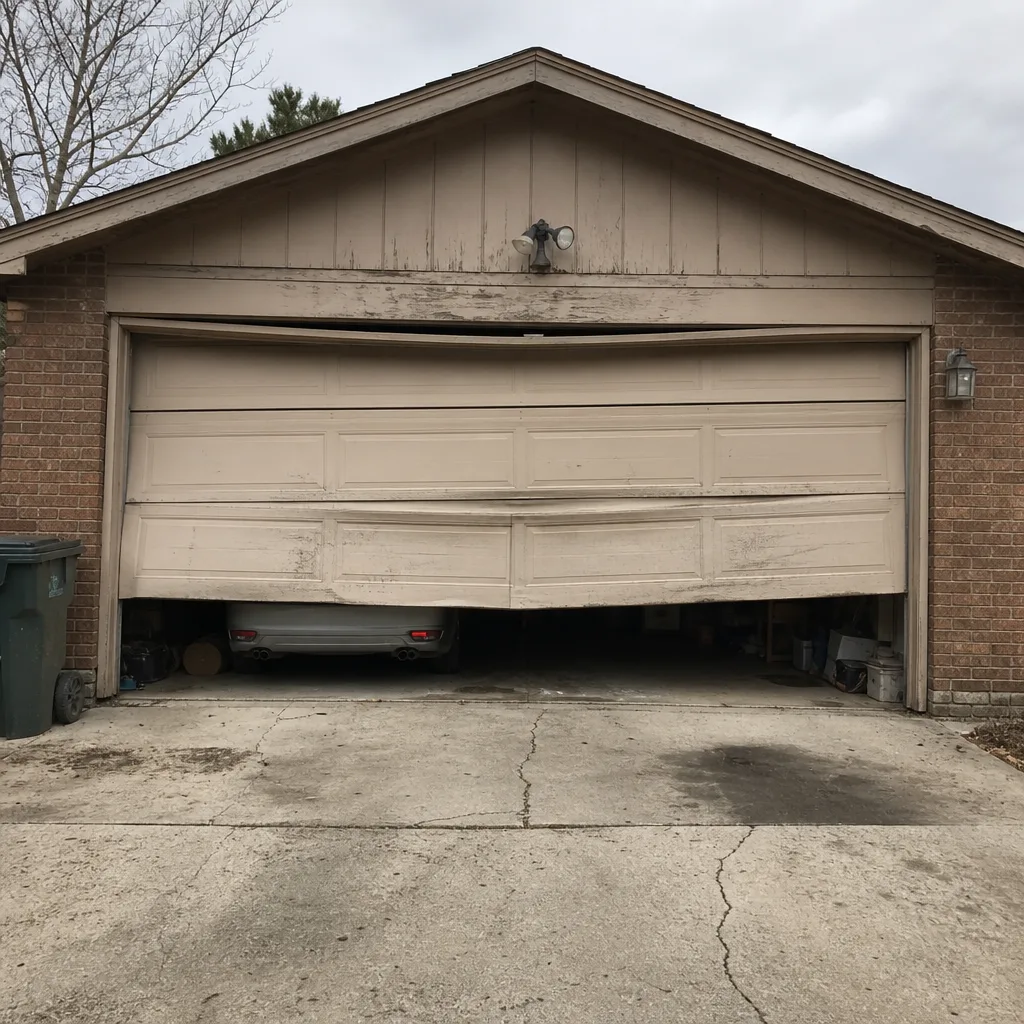 Before
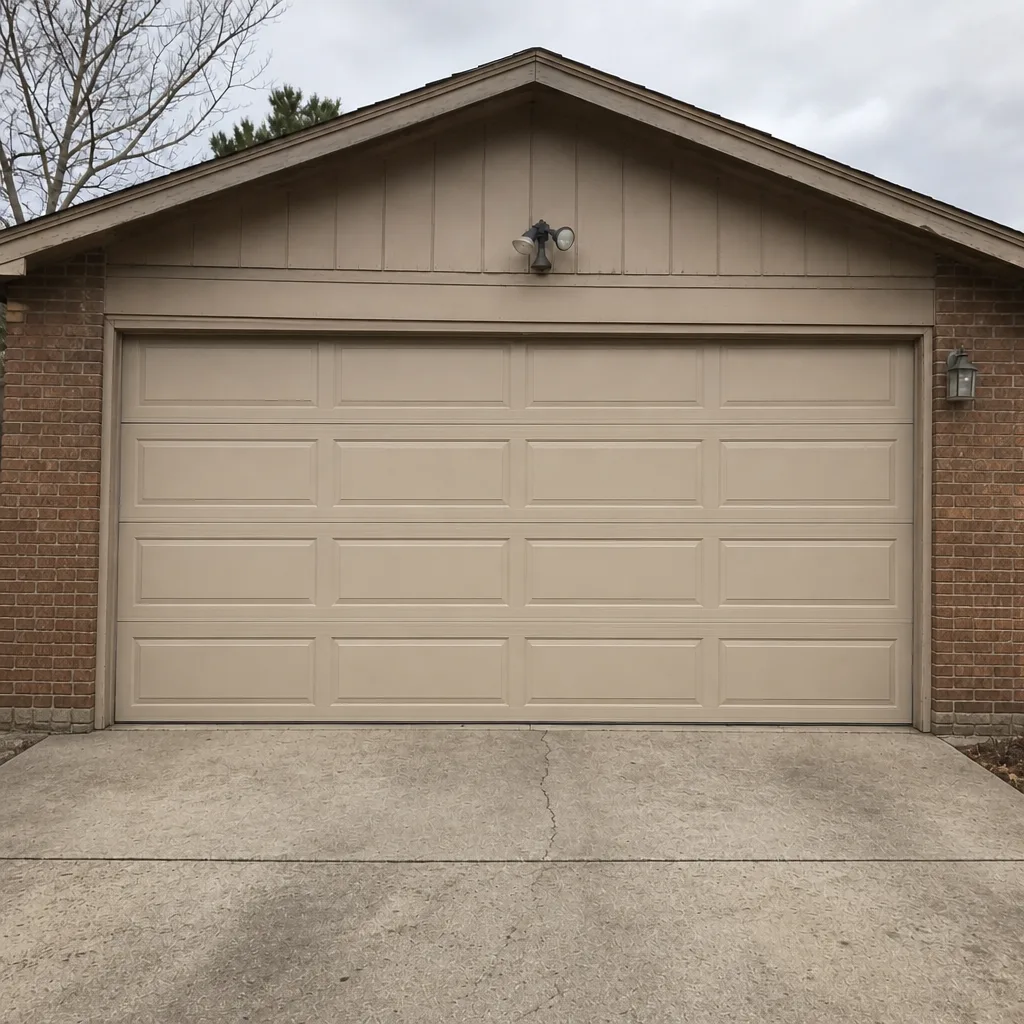 After
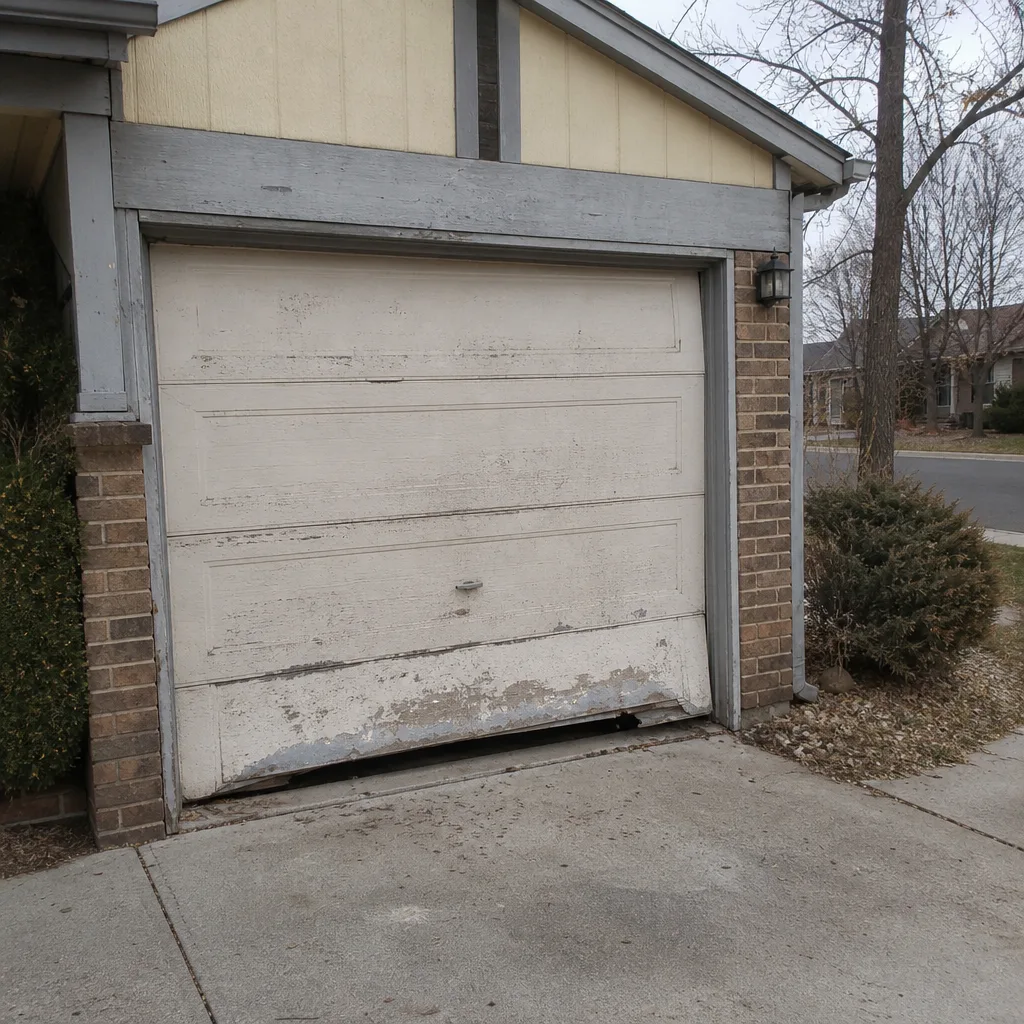 Before
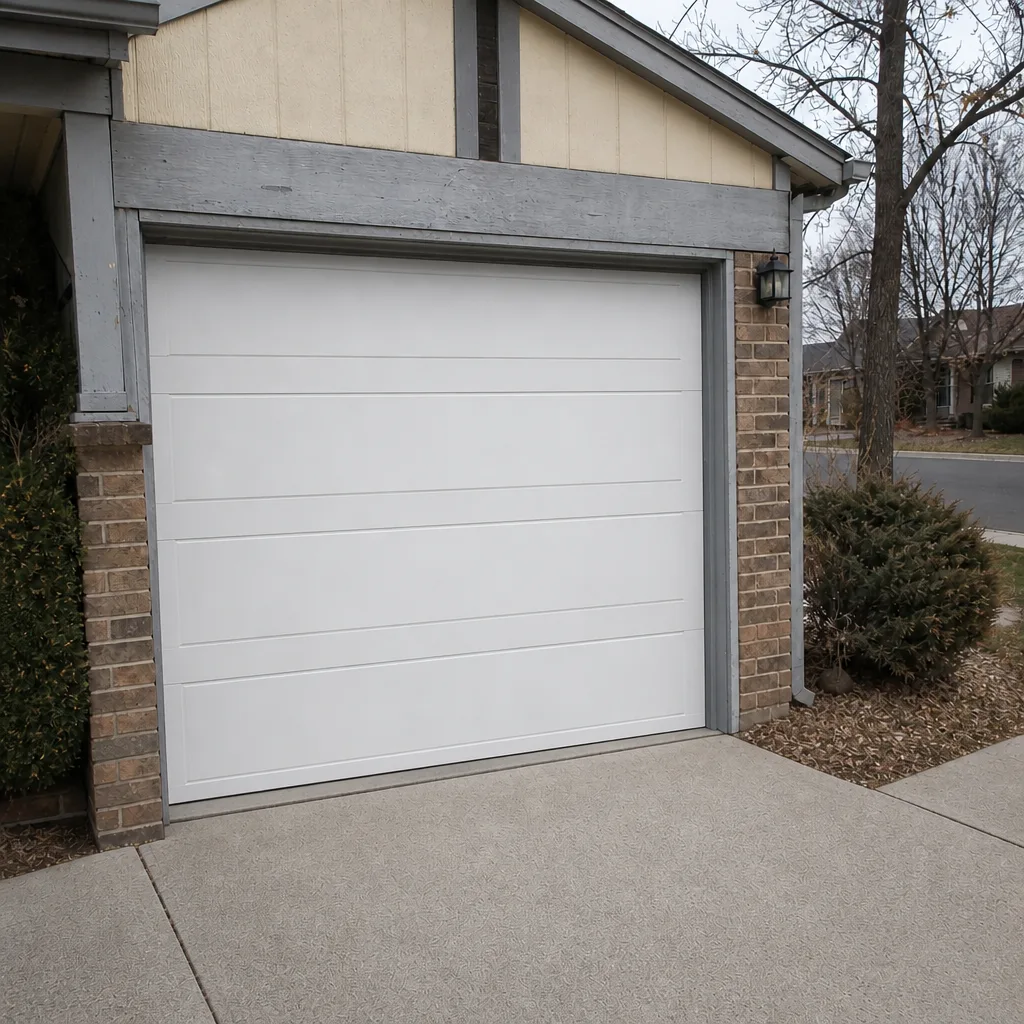 After
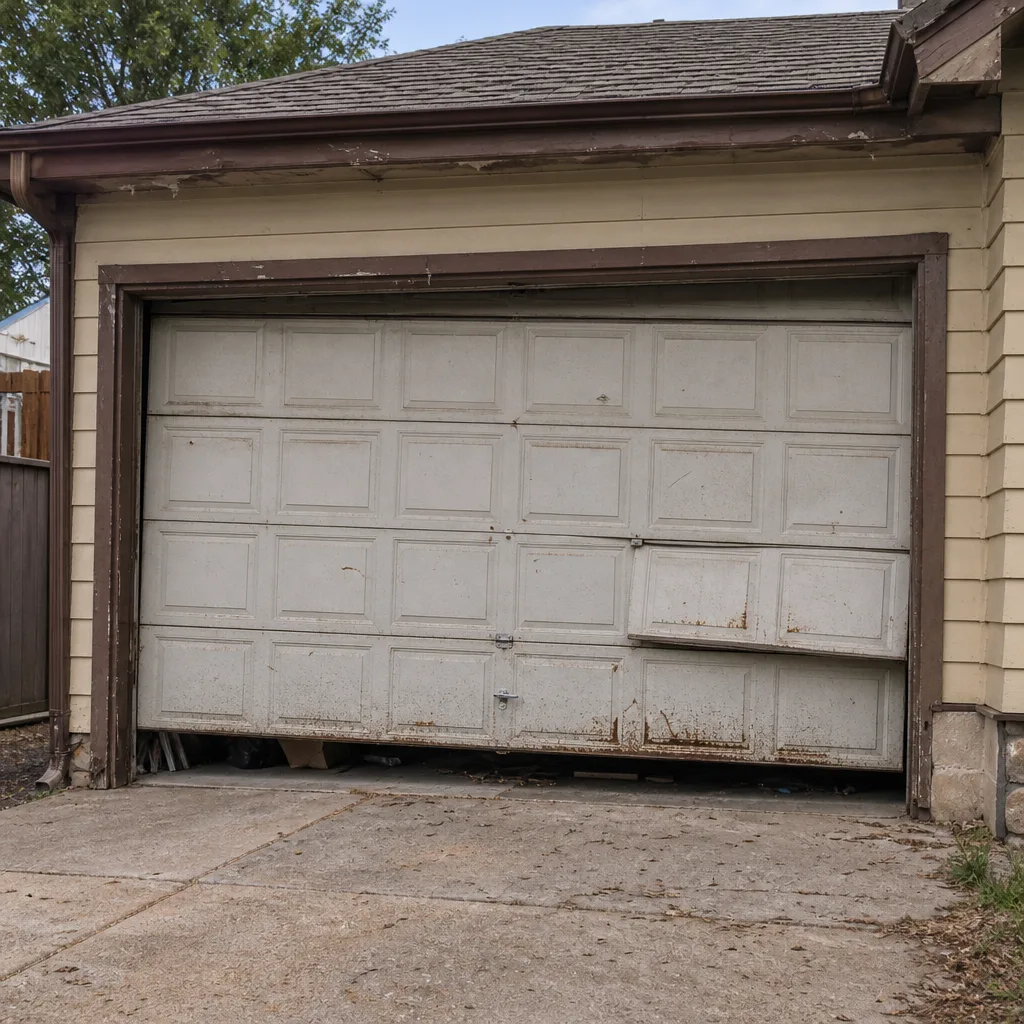 Before
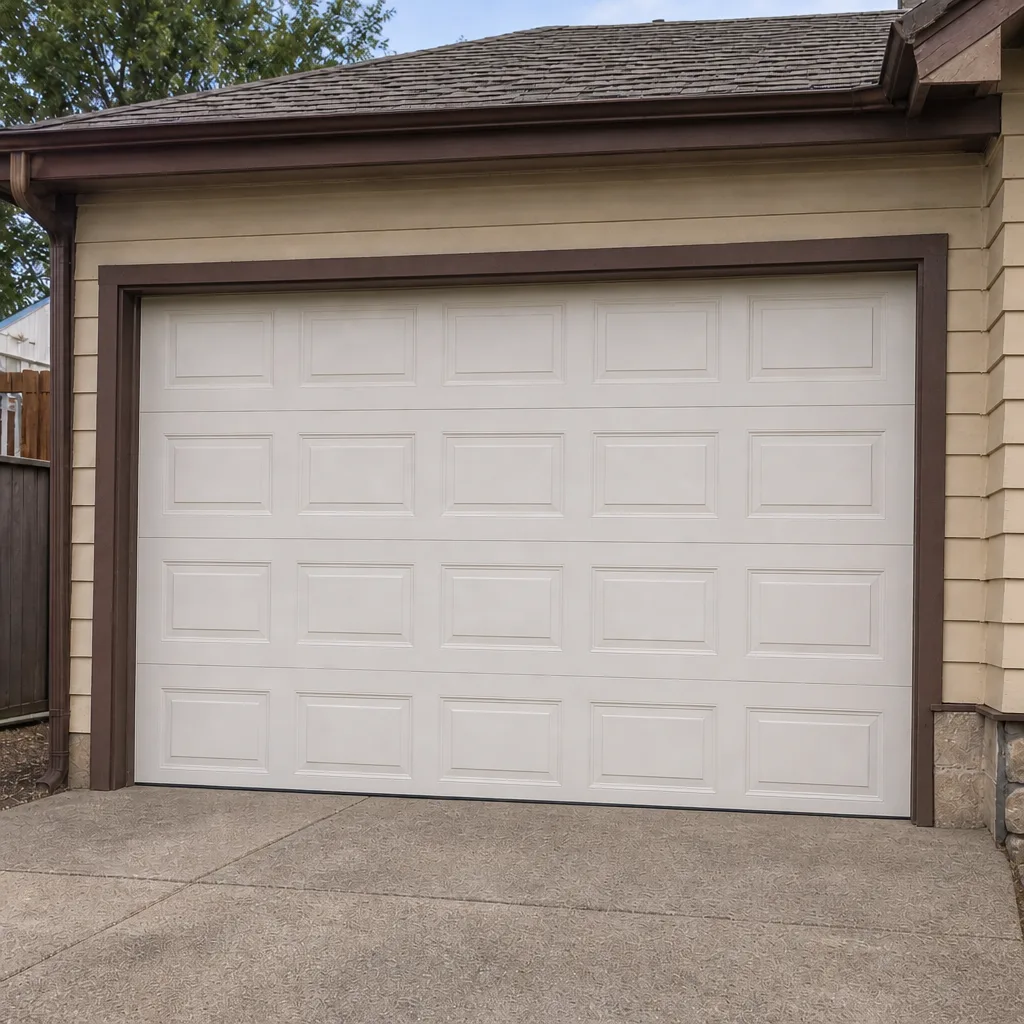 After
How a Small Repair Turns Into an Emergency
The single most expensive thing a homeowner can do with a garage door is wait. Not because a small problem is inherently dangerous, but because a small problem has a habit of becoming a big one at exactly the wrong time. The path looks like this:
- Warning ignored. A door gets slow or a bit noisy. You live with it. It’s been like that for months.
- Tension keeps dropping. An aging spring loses a little lift each cycle. The opener works harder to compensate, and its components wear faster.
- A part fails. The spring snaps, a cable jumps its drum, or a bottom bracket gives way. Now the door is stuck in the air or on the floor.
- The car is trapped. The car in the garage can’t get out. That’s not an inconvenience; it can affect how your day goes for everyone in the house.
- The failed part takes others with it. A snapped spring can bend the torsion tube. A jumped cable can damage a panel or a track. Now you’re replacing more than one part.
So the real savings come from a small repair done early, not from waiting until the emergency. A worn spring replaced before it fails is a small, planned job. The same spring replaced after it snaps, sometimes with a bent tube or a damaged panel to sort out, is a bigger job done on a deadline. And a door stuck open overnight is a security question for the whole house. If you find yourself already there, our same-day spring repair is one of our core services, backed by technicians who see this every week in Lakewood.
A Monthly Walk-Around Checklist
You don’t need special tools to catch most of these early. A two-minute look each month is the best insurance against a surprise failure. Here’s the routine:
- Listen first. Open and close the door once, and pay attention to any popping or scraping.
- Run the balance test. Halfway open, let go, and watch for a hard drop.
- Look at the photo-eyes. Check that both eyes are clean, aligned, and lit. Wipe them if dust or cobwebs are on the lens.
- Scan the cables and drums. Look for fraying, slack, or cable off a drum.
- Check the bottom brackets. Look for cracks, rust, or a backing-out bolt.
- Test the safety reversal. Put a brick or a piece of scrap wood in the door’s path, close the door, and confirm it reverses when it touches.
- Lubricate the moving joints. A garage door lubricant on the hinges and roller stems quiets most squeals.
- Check the weather seal. In the cold months, a stiff seal can cause closures to bounce.
If any test on this list comes back wrong, don’t push the door to prove it. Stop using it and get a professional look. And if you’re unsure what you’re seeing, a free estimate can tell you whether it’s serious or nothing.
Common Mistakes to Avoid
- Treating a noisy door as normal. A door that’s been noisy for months is telling you something. The noise is the warning, not the personality.
- Forcing a stuck door up or down. If the door won’t move or reverses repeatedly, don’t force it. You can damage the panels or the opener, and a stuck door on a failing spring is not safe to force.
- Turning off or removing the safety eyes. If the door reverses, the fix is to find the cause, never to bypass the safety system. The system is there to protect people.
- Winding a spring yourself. Torsion springs are under serious tension, and they’re a job for a trained technician. Losing your grip on a winding bar is a serious injury risk.
- Ignoring cold-weather symptoms. A door that gets heavy in Lakewood’s first cold snap needs attention now; a spring that strains in winter may not last spring.
- Hiring a generalist. Garage doors have their own balance, tension, and safety systems. A specialist knows the difference between a bad spring and a bad track in a way a general handyman often doesn’t.
- Waiting until the car is trapped. A door doesn’t usually fail on a quiet day. Book the repair before the busy week, not during it.
When to Call a Professional
Call a professional when you hear popping or snapping, when the balance test makes the door drop hard, when you see a frayed cable or a cracked bottom bracket, or when the door reverses on its own and cleaning the photo-eyes doesn’t fix it. Those are the signs that point to spring, cable, or safety-system trouble, and they’re not jobs for a homeowner with a wrench. A trained technician has the tools and experience to handle the door’s tension safely.
Garage Door Repair Lakewood Pros offers free estimates in Lakewood – call (833) 968-4997. We’re a garage door specialist, so the door is the only thing we do. Our technicians have up to 14 years of experience, and we work across the brands you probably own. If you suspect a spring problem, don’t wait for it to snap.
Frequently Asked Questions
The first warning signs are usually a door that gets slower or noisier, a balance test where the door drops instead of holding, and any popping or snapping sound. You may also see a slight wobble or a door that reverses unexpectedly. Call (833) 968-4997 for a free estimate if you notice any of these.
You can run the balance test, which involves lifting the door halfway with the opener disconnected and seeing whether it holds. That tells you the springs are tired but does not tune or adjust them. Tightening or replacing springs is a job for a trained technician because of the stored tension. Call us if the door fails the balance test.
A reverse usually means the photo-eyes at the bottom of the door are misaligned or dirty, or the opener has detected resistance from a binding door or a heavy spring. Clean the eyes and align them first. If the door still reverses, call (833) 968-4997, because the cause is mechanical.
Cold weather makes cable and tracks shrink, lubricants stiffen, and springs more brittle, so a door that’s already borderline fails in the first cold snap. If your door feels heavy or slow after a cold night in Lakewood, don’t wait for spring; get it checked. Call us for a free estimate.
Spring repair is priced per job by estimate, and the written estimate sets the final price. The exact price depends on whether it’s a single spring or a matched pair, which are usually replaced together. Call (833) 968-4997 for a free estimate, and we’ll quote it before any work starts.
Not always, but the more the failing part damages downstream, the more you may need to replace. A snapped spring can bend the torsion tube; a jumped cable can damage a panel or track. The earlier you call, the smaller the repair tends to be. Call us to have the door looked at before the failure.
Most likely, yes. We service eight major brands, including Genie, Clopay, Amarr, Wayne Dalton, LiftMaster, Chamberlain, Craftsman, and Raynor. We work on the brand you already own, which means you don’t need a new opener to get service. Call (833) 968-4997 for a free estimate.
The Bottom Line
Garage doors rarely fail without warning. The slow opening, the grinding, the door that drops in the balance test, the reverse that won’t quit are all your door telling you what’s coming. In Lakewood, that conversation speeds up in the cold, so winter is when you should pay the most attention, not the least. Read the signals, do the monthly checklist, and call early. That’s the difference between a planned repair and an emergency. Garage Door Repair Lakewood Pros is here for both, with free estimates and technicians who know these doors inside and out.
If your door is talking, we’re listening. Call (833) 968-4997 for a free estimate, and let’s catch the problem before it catches you. You can start with Garage Door Repair Lakewood Pros to see the services we cover.
Written by the team at Garage Door Repair Lakewood Pros.