Last updated November 21, 2026
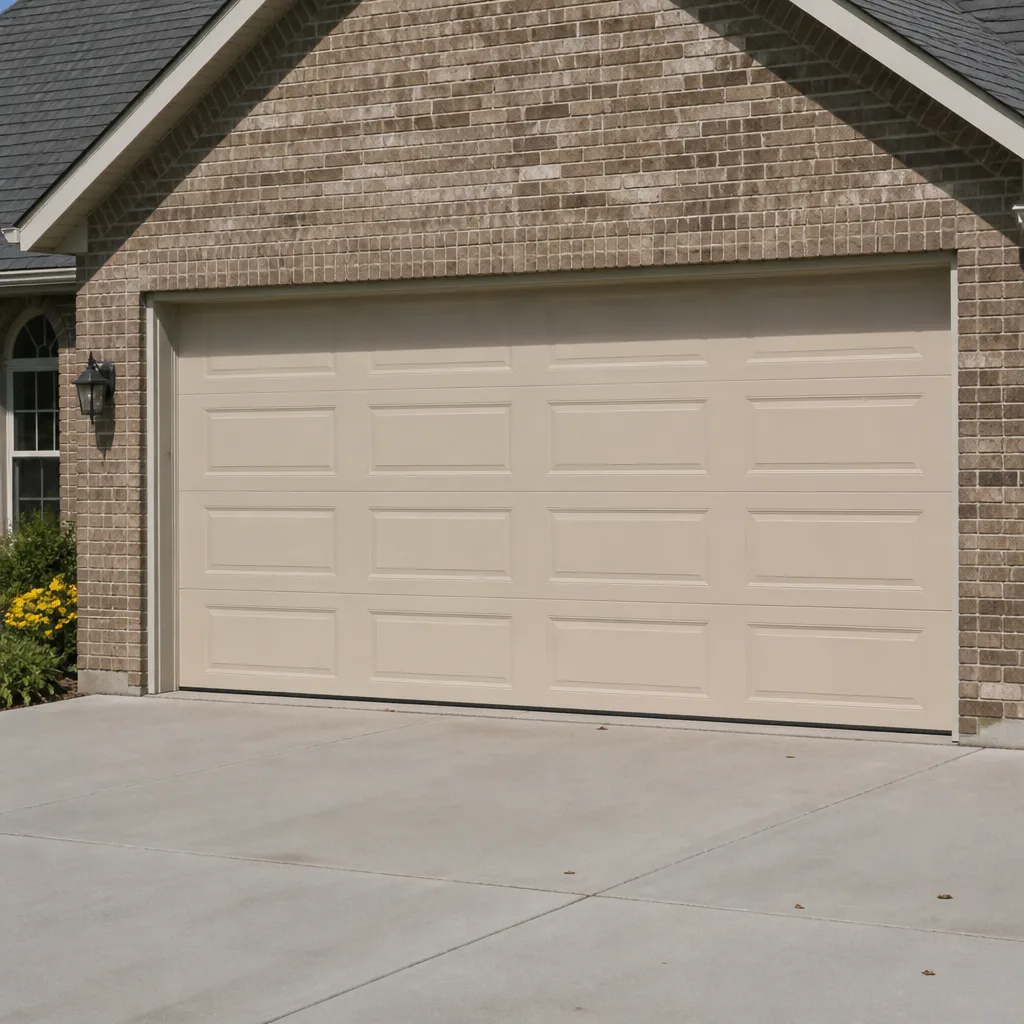 Raised-panel steel
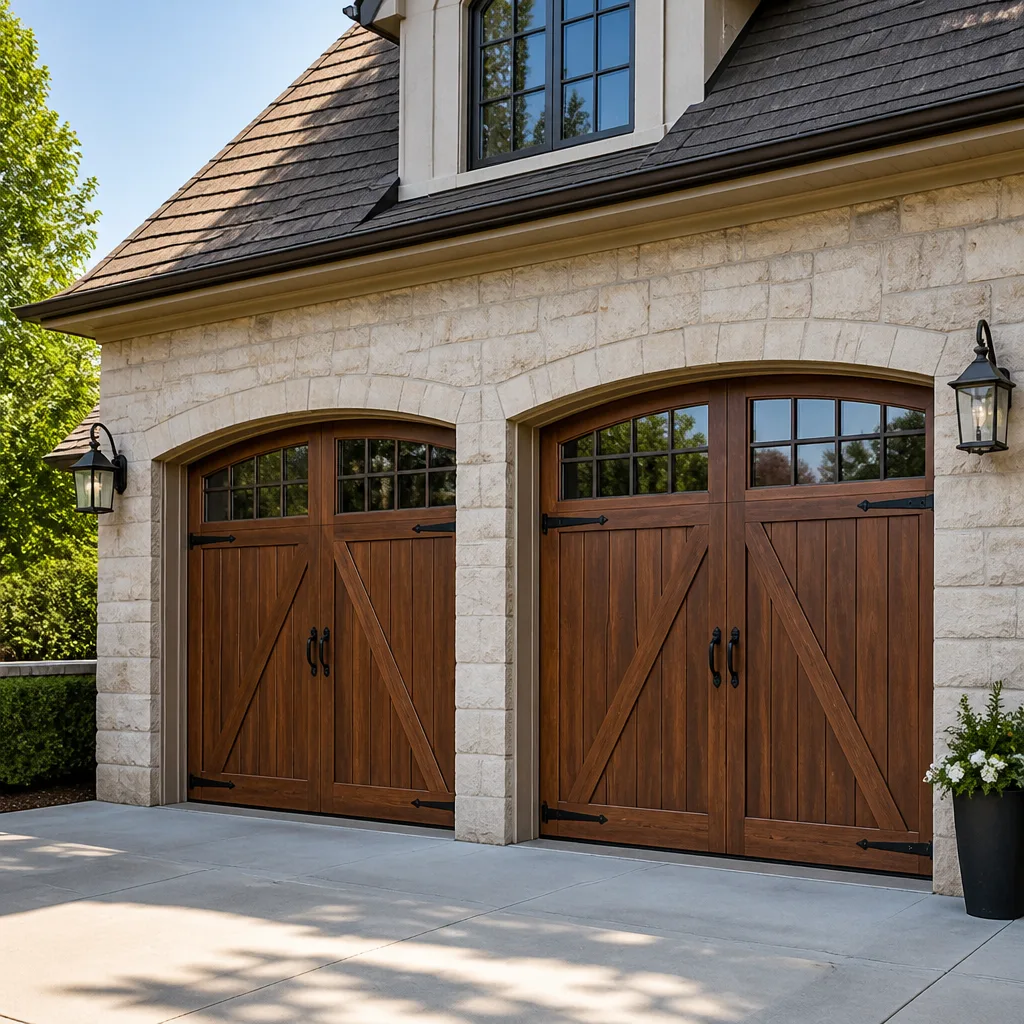 Carriage house
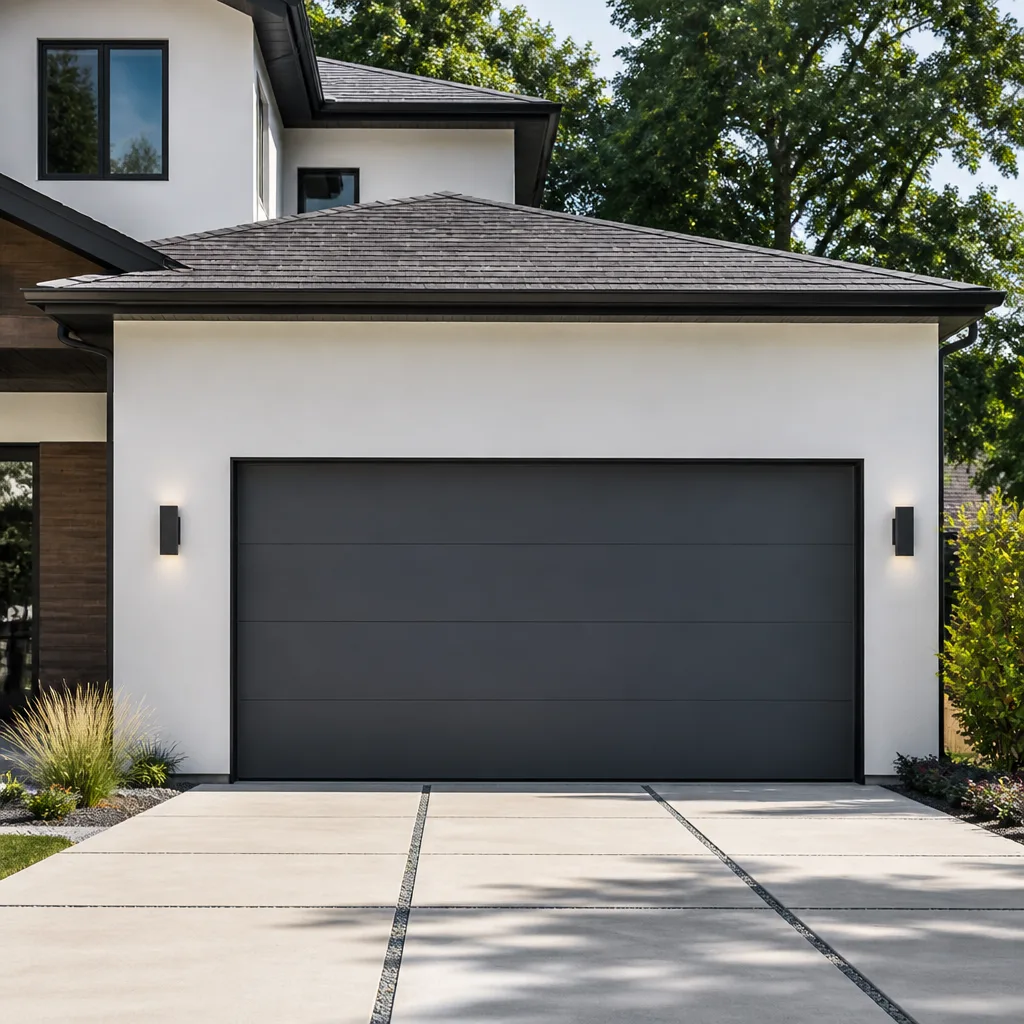 Modern flush
 Full-view glass
 LiftMaster openers
 Chamberlain openers
Full 25-point door and opener safety check with every visit - springs, cables, rollers, tracks, and your LiftMaster or Chamberlain opener included
You get a price before we start. It does not change when the pro arrives.
Get your free estimateDIY vs Professional Garage Door: The Lakewood Homeowner’s Decision Guide
Most homeowners treat the DIY-versus-professional question as a test of nerve. They watch a few videos, decide they’re handy enough, and buy the parts. That’s the wrong frame. The real question isn’t whether you’re skilled enough. It’s whether the specific task in front of you carries injury risk that no tutorial can prepare you for. Torsion springs store enough energy to cause serious injury when they fail during adjustment. That isn’t a liability disclaimer. It’s physics. A 200-pound door balanced by a spring under serious torque won’t forgive improvised technique, and no amount of confidence changes what happens when your grip slips. This guide breaks the job down task by task, so you know exactly which repairs you can handle in a Lakewood garage and which ones belong with a trained technician.
Quick Answer
Safe DIY garage door work is limited to weatherstripping, sensor alignment, lubrication, and tightening visible bolts. Spring replacement, cable work, and track realignment under tension require professional tools and training and should never be attempted by a homeowner. The dividing line isn’t skill. It’s stored energy and the risk of serious injury if something lets go.
Styles & brands we work with
- Raised-panel steel
- Carriage house
- Modern flush
- Full-view glass
- LiftMaster openers
- Chamberlain openers
Table of Contents
- Why the DIY Question Matters More for Garage Doors Than Any Other Home Repair
- What’s Genuinely DIY-Safe: The Tasks You Can Handle
- What Requires a Professional: Springs, Cables, and Tracks
- The Tools That Make Spring Work a Professional Job
- The Honest Cost Comparison: When DIY Saves and When It Costs More
- Why Cold Weather Changes the Risk in Lakewood
- How to Tell a Previous DIY Repair Wasn’t Done Safely
- When to Call a Professional
Why the DIY Question Matters More for Garage Doors Than Any Other Home Repair
You can re-caulk a bathtub and the worst case is a slow leak. A garage door is different. It’s a moving system that weighs between 130 and 350 pounds depending on the material and size, and it’s held in balance by steel springs under constant load. When something goes wrong during a DIY repair, the failure is sudden and violent. A tensioned spring that slips off a winding bar can strike with enough force to break bone. A door that comes free of its cables can crash down. Those outcomes don’t happen with most weekend projects around the house.
There’s a second reason garage doors deserve their own decision framework. The system has four interdependent subsystems: the door panels, the torsion or extension spring, the cable-and-drum assembly, and the opener. Adjust one and you shift the load on the others. A homeowner who replaces a spring with the wrong wire gauge throws off the door’s balance, which then strains the opener and wears the rollers. The garage door repair work we’re called out for in Lakewood often traces back to a well-intentioned fix on one part that overstressed another. Sorting out that kind of chain reaction is often harder than fixing the original problem would have been.
The Real Question Is Task-by-Task
That’s why this guide doesn’t ask “should you DIY your garage door?” It asks “which garage door jobs are actually safe to DIY?” Weatherstripping along the bottom of the door, cleaning and realigning the photo-eye sensors, lubricating hinges and rollers, and tightening visible bolts are all genuinely straightforward tasks. Spring replacement, cable replacement, and track realignment under tension are not. Between those two groups is the grey zone where most garage door injuries occur: homeowners who took on a job that looked like the safe ones but sat squarely in the risky group.
Here in Lakewood, we see this false confidence most often when the weather turns and a door starts acting up. A homeowner who’s comfortable with power tools reaches for the spring as if it were a worn-out door roller. It’s an understandable instinct. It’s also where we start worrying.
What’s Genuinely DIY-Safe: The Tasks You Can Handle
The list of DIY-safe garage door tasks is shorter than most homeowners expect, and that’s the point. Each of these jobs requires no special tensioned tools, no heavy lifting, and no interaction with the springs or cables. If you can stand on a step stool without losing your balance and follow a written instruction, you can do them.
- Replacing bottom weatherstripping: The rubber seal along the bottom of the door pushes into a track (or nails onto the frame, depending on the type). It wears out from sun and temperature swings. Slide the old strip out, slide the new one in.
- Cleaning and aligning photo-eye sensors: If your door won’t close because the opener’s safety beams are blocked, wipe the lenses, check the mounting brackets for looseness, and make sure they’re aimed at each other. Most sensor problems are dirt, a bumped bracket, or a wire pulled loose.
- Lubricating rollers, hinges, and springs: A garage door needs a proper lubricant on moving parts once or twice a year. This is preventive, harmless, and extends the life of the system. Avoid heavy grease on tracks, which attracts grit.
- Tightening exposed hinge and bracket bolts: Vibration loosens hardware over time. A socket wrench on visible bolts can quiet a rattling door in a few minutes.
- Replacing a remote battery: When a remote stops working but the wall button still operates the door, a fresh battery usually solves it. Match the battery type printed inside the remote.
- Replacing opener light bulbs: Use the bulb type specified in your opener’s manual. Some modern openers call for a particular bulb to avoid interference with the electronics.
Outside of these tasks, the DIY logic gets shaky fast. If a job requires you to touch the springs, the cables, or the track under load, move to the professional column. The other place to stop is a heavy door that’s visibly out of balance. That’s a professional diagnostic, not a homeowner job, and the fix could be a worn spring, a bad roller, or a bent track.
One more protective step for anything on this list: the door stays closed and the opener stays unplugged while you’re working around it. That single habit prevents a lot of avoidable surprises.
What Requires a Professional: Springs, Cables, and Tracks
Three garage door jobs are regularly attempted by homeowners and belong firmly in the professional column. Not because technicians have magic hands, but because these jobs involve stored energy or structural loads that go wrong in a hurry.
Torsion Spring Replacement
The torsion spring is the coil mounted on the shaft above the door. It stores the energy that lifts the door and carries the door’s entire weight. Replacing one requires releasing that tension, measuring the existing spring’s wire size, inside diameter, and length, and winding the new spring to a specific number of turns. Get any part of that wrong and the door is either too heavy to lift or under so much pressure that hardware fails prematurely. Get the release wrong and someone gets hurt. Spring repair is a dedicated service at Garage Door Repair Lakewood Pros, not an afterthought, because it’s the single most technically demanding repair in the trade.
Cable Replacement
The lift cables run from the bottom corners of the door up to the drums at the spring shaft. They’re under the same tension as the springs. When a cable frays or snaps, replacing it means removing the shaft tension, setting the new cable on the drums correctly, and rebalancing the door. A cable that’s set wrong will slip off the drum, and a door that loses one cable falls on one side.
Track Realignment
Bent or misaligned tracks are tempting to bend back into place with a hammer or a pry bar. Steel track that’s been bent usually doesn’t stay true. Doors pitched against a warped track bind and stress the opener, which is exactly the callback scenario we describe further down. Track work should be measured and adjusted, not bashed.
There’s a general rule that’s worth repeating: any job that requires touching a spring or cable under load goes to a trained technician, and if a cable is frayed or a spring looks broken, the door comes out of daily use until it’s fixed. If you’re not sure whether your situation fits the professional column, garage door repair is a reasonable place to start the inquiry.
The Tools That Make Spring Work a Professional Job
If you’ve ever watched a spring repair video and thought “I could probably do that,” the tool list is where the thinking usually shifts. The winding and releasing of a torsion spring isn’t done with ordinary hand tools. It’s done with specific tools designed for the torque and the failure mode.
The core tools are:
- Winding bars: Solid steel rods that insert into the spring’s winding cone. A technician typically uses a matched pair so the spring is always controlled by two points of contact. Improvised substitutes like screwdrivers or sockets bend, slip, or strip the cone.
- A winding bar clip or locking pliers: Holds the door’s shaft in place while the spring is removed and installed. Without it, the shaft spins freely and can whip the door up or down.
- Spring calipers and a tape measure: Torsion springs are selected by wire diameter, coil length, and inside diameter. A few thousandths of an inch on the wire changes the spring’s capacity. You can’t eyeball it.
- Proper winding instruction for the door’s weight: Every door needs a specific number of quarter-turns on the spring, based on the door height and drum groove. Guessing the number of turns is how doors end up too heavy to lift or too loose to close safely.
- A deliberate safety protocol: Stand clear of the spring’s path, use eye protection, don’t wear loose clothing, and never wrap your body around the spring during winding.
Those tools aren’t exotic. They’re just uncommon in a home garage, and there’s no safe substitute for most of them. A homeowner working on a spring without them isn’t being resourceful. They’re improvising with stored energy.
The same logic applies to the opener. When something’s wrong with the motor unit, the belt, or the gear assembly, professional diagnosis saves money in the end. Whether your opener is a classic Craftsman or a wi-fi-enabled LiftMaster, the behavior of the door and the motor tells a trained technician where to look. If you want a deeper walk-through of opener-specific symptoms, garage door opener repair covers the diagnostic side in more detail.
The Honest Cost Comparison: When DIY Saves and When It Costs More
The honest answer on cost is that DIY saves real money on some garage door jobs and creates a callback scenario that costs more than the original professional repair on others. The split falls almost exactly where the task-by-task line falls. Safe DIY tasks have low parts costs and low failure consequences. Risky tasks have moderate parts costs but very high failure consequences, and one failure wipes out the savings.
DIY-Safe Tasks: Where You Save
Weatherstripping, sensor cleaning, and lubrication are cheap parts and cheap interventions. The DIY math works here because the cost of getting it slightly wrong is small. A bottom seal that’s installed a little crooked seals less well but causes no damage. A sensor that’s still slightly misaligned just means a second look. You save the cost of a service call and the parts are inexpensive.
Risky Tasks: Where DIY Can Cost More
Spring, cable, and track work have a different math. The parts themselves aren’t expensive relative to a service call. The reason the DIY math breaks here isn’t parts cost. It’s what happens when the job is incomplete or incorrectly set. A spring wound to the wrong tension puts strain on the opener, the rollers, and the hinges. Within a few months, the door needs more repairs than the spring alone. A cable installed with the wrong drum seating causes the door to run unevenly, which pits the rollers and stresses one side of the track. A bent track that’s been hammered back into shape stresses the opener until the drive gear fails. Each of those outcomes is a second service call that, combined with the first, costs more than the original repair would have.
There’s a third cost that’s less visible: time. A homeowner who spends a weekend evenings trying to sort out a spring that’s not balanced has spent hours on a job a trained technician would finish in a single visit. That time has value, even if it doesn’t show up on a receipt.
We quote every job before any work starts, in writing, and the written estimate sets the final price. If the job changes when we look at the door, we talk it through before we touch anything. That’s the pricing model that makes the professional side worth comparing against. Call (833) 968-4997 for a free estimate if you want to put a number against your specific door.
Why Cold Weather Changes the Risk in Lakewood
Garage doors in Lakewood live through a real temperature swing. Summer days run hot and dry. Winter brings hard freezes, snow, and freeze-thaw cycles that work on every joint and seal on the door. That climate matters directly for the DIY decision, and it’s the context that most general DIY advice skips.
Cold affects the spring material itself. Steel loses some of its elasticity as it cools, and a spring that fails in cold weather tends to release its energy more abruptly than one that fails in warm weather. The same tension that’s manageable at 75 degrees is less forgiving at 20 degrees. For a homeowner working on a spring in an unheated garage, that difference is the margin of error, and the margin is thinner than most tutorials suggest.
The cold also changes how the door behaves. Steel and aluminum panels contract, seals stiffen, and tracks can shift as the ground under a driveway moves with the freeze-thaw cycle. A door that was perfectly balanced in October can feel heavy and out of tune by January, not because anything is broken but because everything has contracted slightly. That’s the season when a spring that’s already near the end of its life lets go, and it’s also the season when a homeowner is most tempted to replace it themselves because they’re cold and in a hurry.
We work on cold-weather door problems across the west side of the Denver metro all season, in neighborhoods from Belmar to Green Mountain to the streets near Addenbrooke Park. The pattern is consistent: doors that got a little hard to lift in fall become a real problem by the first hard freeze. If your Lakewood door is stiff and the temperature is dropping, that’s the moment to have a trained technician look at the spring rather than the moment to attempt it yourself. Cold weather spring work carries extra risk, and the fix is short. A trained technician can usually sort a spring in a single visit.
How to Tell a Previous DIY Repair Wasn’t Done Safely
If you bought a Lakewood home recently, or you’re wondering about a repair someone else attempted, a few visible signs will tell you whether the earlier work is sound or needs attention. None of these signs is a diagnosis. They’re prompts to get a trained set of eyes on the door.
- Mismatched spring wire: If the two springs above the door use visibly different wire gauges or coil lengths, something was replaced piecemeal. A matched pair should look identical.
- Fresh tool marks on the winding cone: Deep gouges, chewed-up flats, or stripped set screws on the winding cone usually mean an improvised tool was used to wind the spring.
- Loose or re-drilled track brackets: Extra holes next to the original mounting holes suggest the track was adjusted on the fly rather than measured and set.
- Uneven door travel: If the door rises on one side faster than the other, or sags on one corner when open, the cable or track work is off.
- Openers that labor on a balanced door: A properly balanced door stays level at mid-height with the opener disconnected. If the door slams down when you pull the manual release, the spring or balance is wrong.
- Hinge brackets bent in the same direction: Hinge plates bent uniformly, or bent in a way no normal use would produce, often point to a door that was forced open against a bad track.
When two or more of those signs are present, the door is a candidate for a full inspection before it’s used. We see it often enough in Lakewood that we’ve started opening the inspection by looking for what a prior repair left behind, because it changes what needs to happen next. The fix isn’t always a full replacement, and it isn’t always a single part. Tracing the chain of cause and effect is the job.
If you’re considering a new door rather than a fix, the same rule applies: garage door installation is measured, ordered, and scheduled, so the conversation starts with a free measure and a written price rather than a same-day visit.
Common Mistakes to Avoid
- Winding a torsion spring without winding bars. Screwdrivers, sockets, and pry bars bend or slip under load. A winding bar is the only safe tool for the job, and anything else is a hazard rather than a workaround.
- Replacing one spring when the other is the same age. Springs wear at the same rate. Replacing one leaves a mismatch in tension that strains the door. A matched pair is usually the right call, and a pair costs roughly twice what one spring does.
- Bending a warped track back with a hammer. Track that’s been forced out of shape rarely stays true, and a warped track accelerates wear on the opener. Measure and realign, don’t hammer.
- Trying a spring repair in freezing weather. Cold makes the steel more brittle and the tension harder to control. Lakewood winters cause plenty of spring failures for a reason, and the same cold that caused the break is the wrong condition to attempt the repair in.
- Disconnecting the opener and letting the door fall. Pulling the manual release on a door with a broken or worn spring can send a 200-pound slab down in a hurry. Before you pull the release, know what the door is going to do.
- Using the door after a cable snaps. A door running on one cable is running on half its support. It can come off track, slam, or drop. Leave it closed until a technician inspects it.
- Chasing the wrong problem. A door that won’t close might have a misaligned sensor, a bad limit switch, or a failing opener. Guessing at the parts costs more than a diagnosis, especially on a multi-brand system like a LiftMaster, Chamberlain, or Genie opener with specific behavior codes.
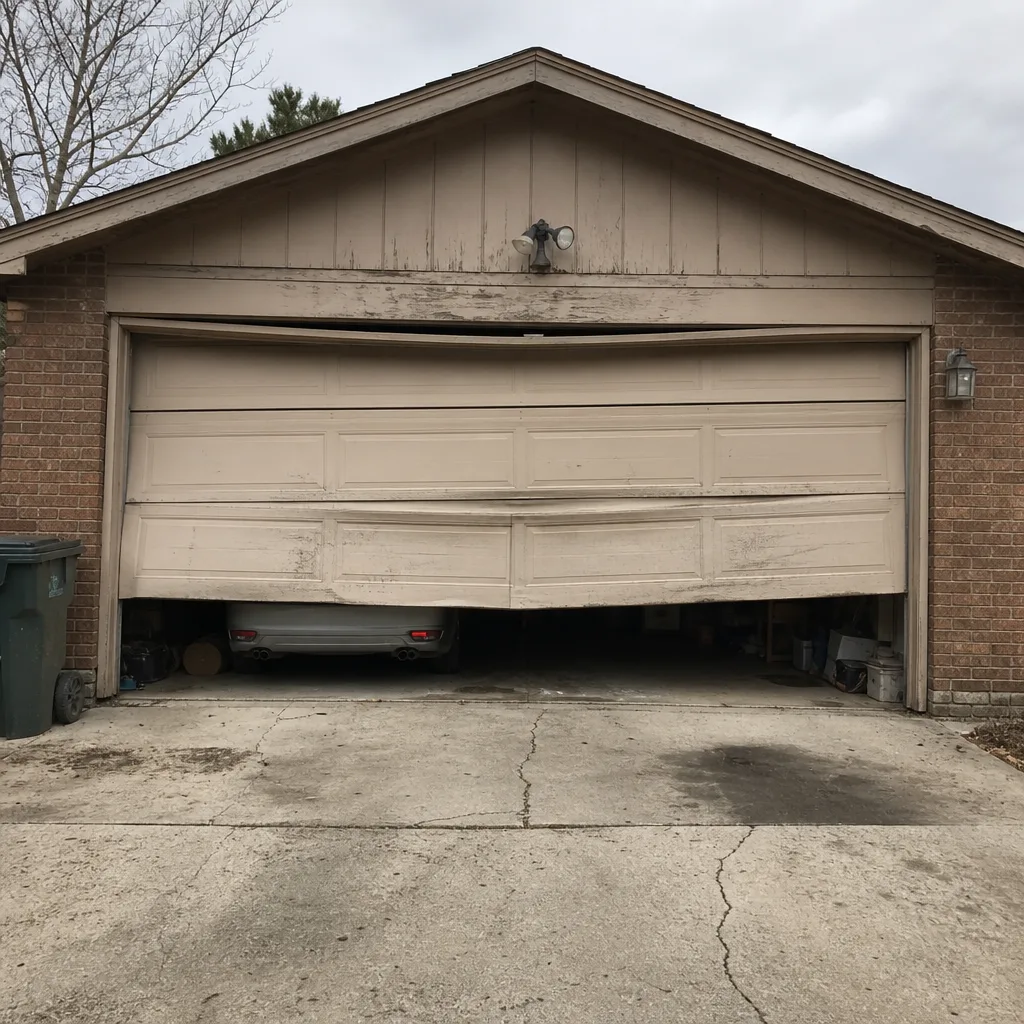
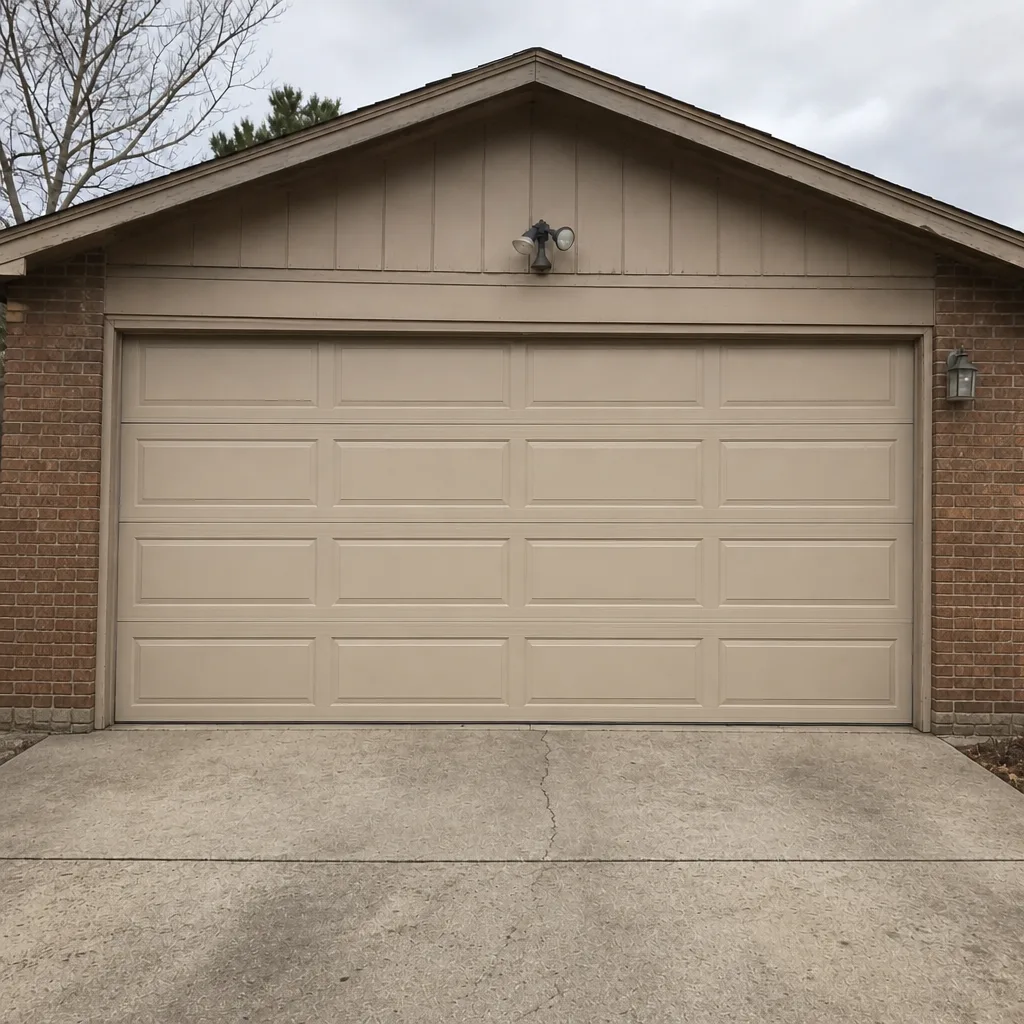
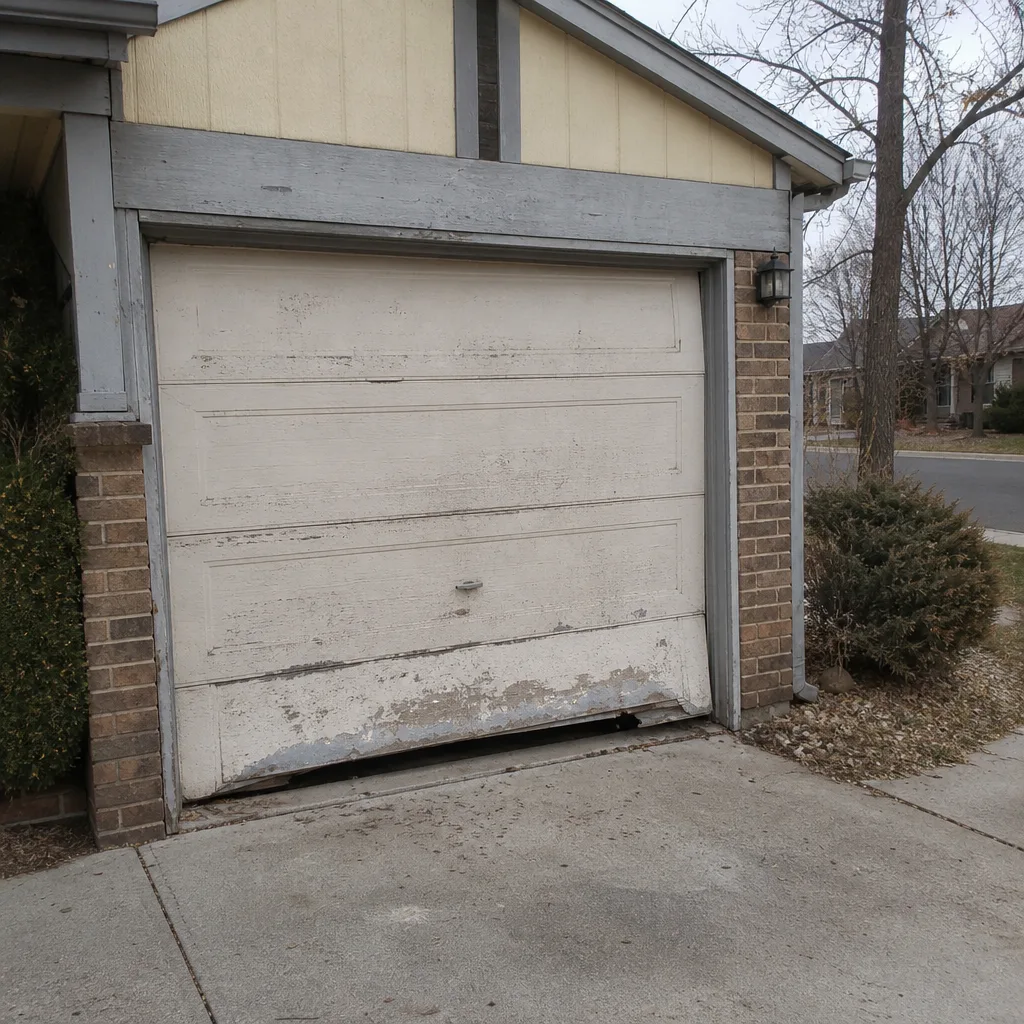
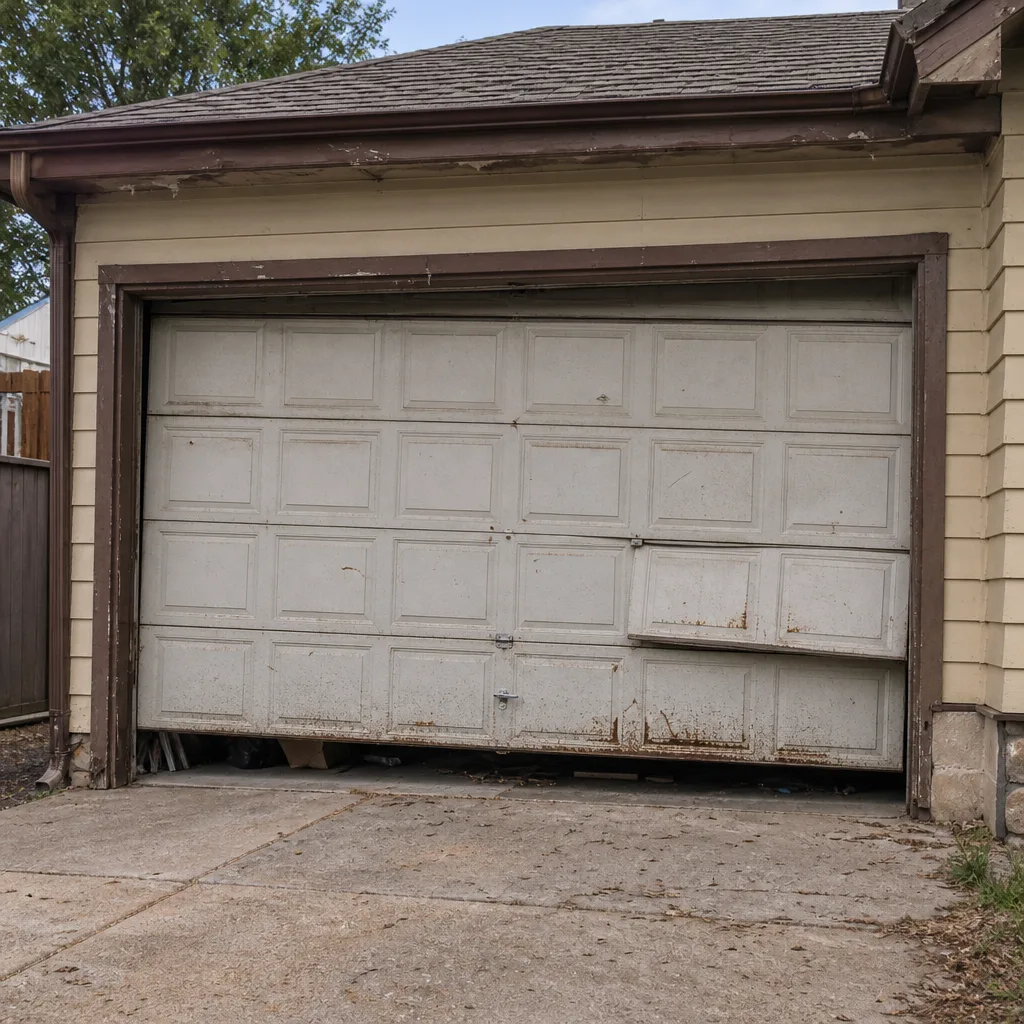
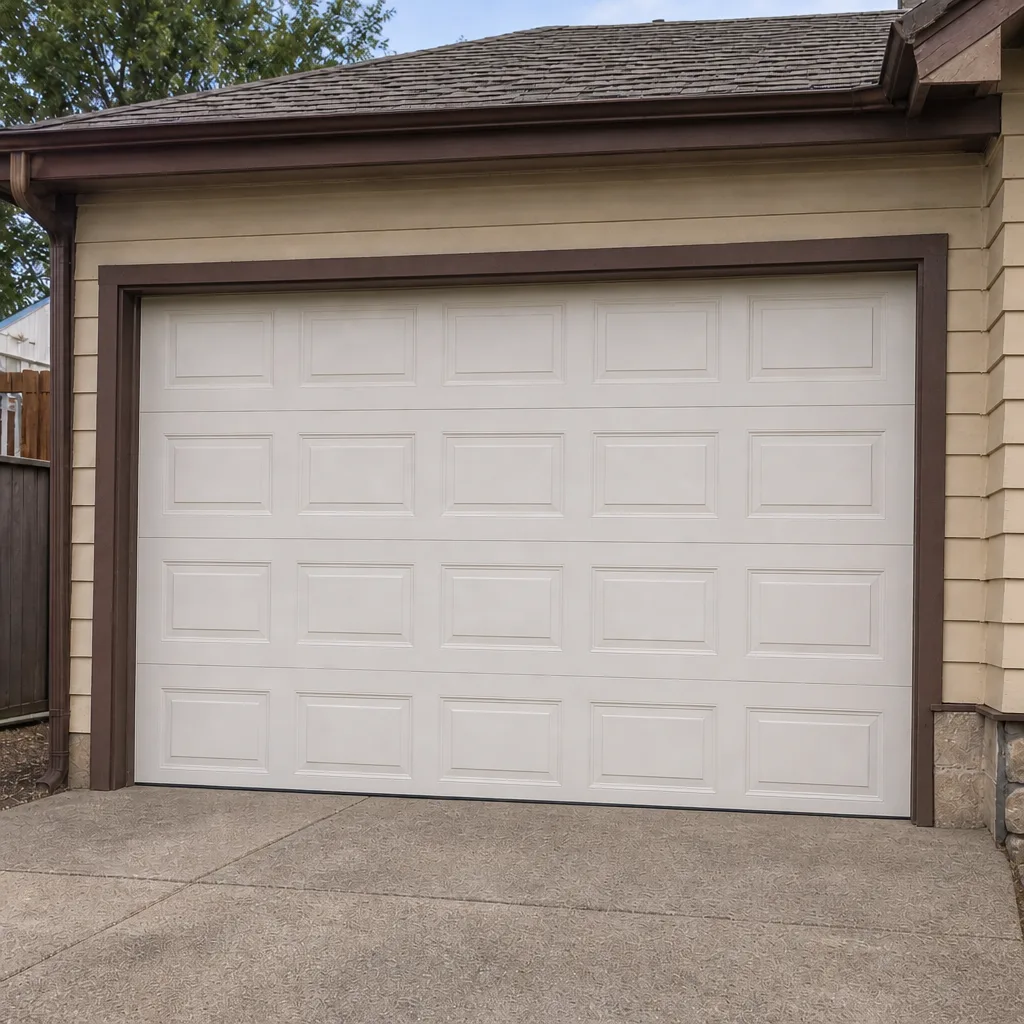
See the difference
 Before
 After
 Before
 After
 Before
 After
When to Call a Professional
Call a professional the moment the problem involves a spring, a cable, or a track. Call us if the door won’t lift without heavy effort, if you hear a loud bang from the garage and the door won’t open, if the door hangs unevenly on one side, or if a cable is visibly frayed or slack. Call us as well if you inherited a DIY repair you’re not sure about, or if your Lakewood door has become stiff and slow as the temperature drops. Garage Door Repair Lakewood Pros offers free estimates in Lakewood, and we quote in writing before any work starts. Call (833) 968-4997 to get a specific number for your door. Our technicians have up to 14 years of experience, and garage doors are the only thing we do.
Frequently Asked Questions
No. Torsion and extension springs are under enough stored energy to cause serious injury if they slip during adjustment, and the tools required to wind them safely aren’t standard homeowner equipment. Attempting a spring replacement without winding bars, calipers, and a proper winding protocol is a genuine hazard, not a shortcut. Call (833) 968-4997 for a free estimate and let a trained technician handle it.
Weatherstripping replacement, sensor cleaning and alignment, lubrication, tightening exposed bolts, and remote battery replacement are all safe homeowner jobs. Anything involving the springs, cables, or track under load requires professional tools and training. The dividing line is stored energy: if the job puts you in contact with a tensioned spring or cable, hand it to a technician. Call (833) 968-4997 with any questions about where your repair falls.
Cold reduces steel’s elasticity, so a spring that fails in freezing weather tends to release its energy more abruptly, and the same tension is harder to control during adjustment. Lakewood’s hard winters and freeze-thaw cycles are exactly the conditions that break springs and the worst conditions to attempt the repair in. That’s a job for a trained technician working deliberately, not for a homeowner in an unheated garage. Call (833) 968-4997 for a free estimate.
Look for mismatched spring wire, tool marks on the winding cone, extra bracket holes in the track, a door that rises unevenly, or an opener that struggles on a supposedly balanced door. Any two of those signs is grounds for a professional inspection before the door is used. Our technicians have up to 14 years of experience spotting those signs, and we can quote a fix in writing before any work starts. Call (833) 968-4997.
On paper, DIY is cheaper on parts, but a spring wound to the wrong tension causes opener, roller, and track wear that turns into additional repairs within a few months. By the time the second service call is done, DIY usually costs more than the original professional job would have. The written estimate we give you sets the final price, so the comparison is apples to apples. Call (833) 968-4997 for a free quote on your door.
No. We quote every job in writing before any work starts, and the written estimate is the price. If the scope changes when we look at the door, we talk it through before touching anything, so there are no surprises on the invoice. That’s how we work in Lakewood on every job, from a spring replacement to a full new door. Call (833) 968-4997 for a free estimate and a clear range.
The Bottom Line
The DIY question for garage doors comes down to stored energy. Weatherstripping, sensors, and lubrication are genuinely homeowner-friendly, and doing them yourself saves real money. Springs, cables, and track work under tension are not, no matter how handy you are. In Lakewood, cold weather adds risk to spring work and triggers most of the failures we see. If your door is stiff, balanced poorly, or showing signs of an earlier repair that wasn’t finished safely, that’s the moment to call a trained technician. Our technicians have up to 14 years of experience, we work across LiftMaster, Chamberlain, Genie, Raynor, and other major brands, and garage doors are the only thing we do. Written estimates come before any work starts, and the price we quote is the price you pay.
Ready to sort out your Lakewood garage door? Call (833) 968-4997 for a free estimate, and we’ll tell you exactly what your door needs. Whether it’s a spring that’s given up, an opener that’s acting strange, or a repair you want checked before it becomes a bigger job, a written quote is the place to start. You can also start at Garage Door Repair Lakewood Pros to see how we work.
Written by the team at Garage Door Repair Lakewood Pros.